A Closer Look at Philadelphia’s Most Livable Communities
25 October 2026
Philadelphia is a city of neighborhoods in the truest sense. Ask ten longtime residents where the best place to live is, and you will likely get ten different answers, each delivered with genuine conviction. That is not indecision. It is a reflection of how varied the city really is. A block can change character in a five-minute walk, and two neighborhoods that share a ZIP code can offer completely different daily realities.
This guide is for buyers, renters, and relocating families who want more than a list of trendy names. It looks at what makes a Philadelphia neighborhood livable in practice: commute patterns, housing stock, school catchments, tax implications, parking reality, and the small daily details that rarely make it into marketing brochures. It also covers the trade-offs that come with each choice, because every neighborhood that excels at one thing usually gives up something else.
What Livability Actually Means in Philadelphia
Livability is not a fixed score. It is a match between a place and a person's life. A neighborhood that feels perfect for a remote worker in their thirties may be frustrating for a family with two cars and a tight school schedule. Before comparing areas, define your own priorities honestly.Most Philadelphia buyers and renters weigh a handful of factors:
- Commute and transit access. Center City employment, University City, the Navy Yard, and suburban job centers each pull from different corridors. Proximity to a SEPTA Regional Rail station or the Market-Frankford and Broad Street lines often matters more than raw distance.
- Housing type and price band. Philadelphia's stock ranges from prewar rowhouses to converted industrial lofts to postwar twins. Each comes with different maintenance profiles and financing quirks.
- Schools. Philadelphia's public school system includes neighborhood schools, citywide magnet and special admission schools, and charter options. Catchment boundaries matter, but so does the reality that many families apply citywide rather than defaulting to the assigned school.
- Taxes. Philadelphia residents pay both wage tax and property tax, and the city's property tax reassessment process (the Actual Value Initiative) has shifted bills in recent years. Comparing city versus suburban tax burdens is a common source of surprises.
- Parking and car dependence. Some neighborhoods are genuinely walkable and transit-rich. Others practically require a car, and the daily hunt for street parking becomes a real quality-of-life factor.
- Safety perceptions and block-level variation. Crime in Philadelphia, as in most cities, is not uniform across a neighborhood. Looking at block-level patterns and talking to residents matters more than citywide headlines.
With those criteria in mind, here is an honest look at several communities that consistently earn high marks for livability, along with the trade-offs each one asks you to accept.
Center City and Rittenhouse: Urban Convenience at a Premium
Center City remains the most walkable and transit-connected part of Philadelphia. Rittenhouse Square, Washington Square West, and the Gayborhood offer dense access to restaurants, offices, cultural institutions, and medical facilities. If your priority is a car-light or car-free life, few places in the region compete.The trade-offs are straightforward. Prices per square foot run high, and the housing stock skews toward condominiums and co-ops with monthly fees that can rival a small mortgage. HOA and condo association health is a genuine due diligence item here; underfunded reserves in older buildings have burned plenty of buyers. Street parking is difficult, and garage space, when available, is expensive.
Who it suits: professionals working in Center City, empty nesters downsizing from the suburbs, and anyone who values walking over yard space. Who should look elsewhere: buyers needing three or more bedrooms on a budget, and households that depend on two cars.
Fitler Square and Graduate Hospital: The Quiet Middle Ground
Just south of Rittenhouse, Fitler Square and the Graduate Hospital area (sometimes called South of South) have become some of the most sought-after addresses in the city. They combine walkability with quieter residential blocks, a strong stock of renovated rowhouses, and easy access to the Schuylkill River Trail.The nuance here is new construction. Graduate Hospital saw a wave of new-construction townhomes, and build quality varies widely. A ten-year-old house can look identical to a brand-new one from the street while hiding very different systems, insulation, and warranty histories. Buyers should ask for construction documentation and consider a thorough inspection, including the roof and mechanical systems.
Trade-offs: prices have climbed substantially, inventory is tight, and parking on the narrower side streets is a daily negotiation. The neighborhood also sits in a flood-prone low-lying area near the Schuylkill in parts, so checking flood zone maps and insurance costs before making an offer is a practical step, not an alarmist one.
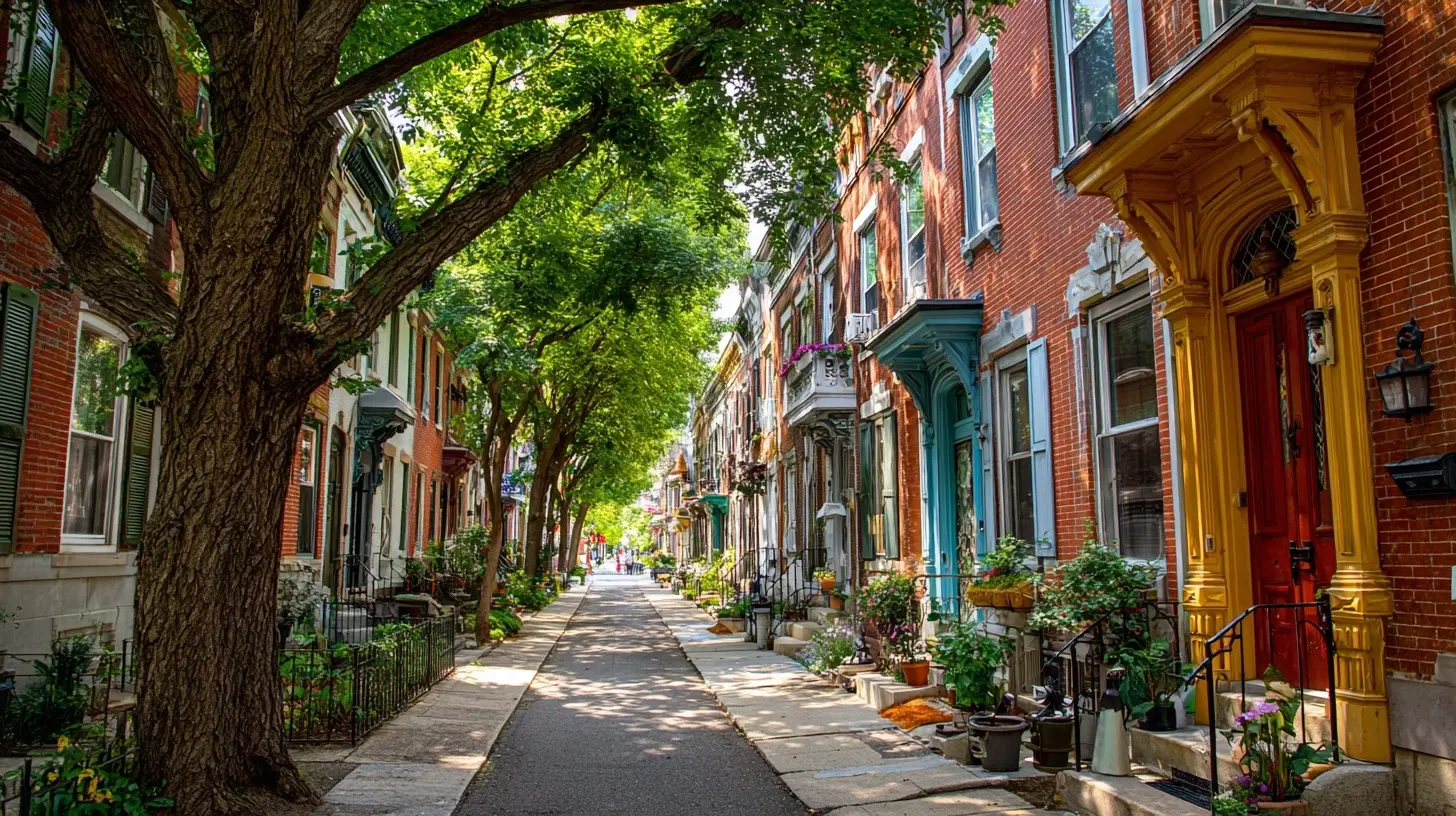
Queen Village and Bella Vista: Character With Complexity
South of South Street, Queen Village and Bella Vista offer some of the oldest housing stock in the city, mature street trees, and a genuinely mixed-use feel. The Italian Market anchors Bella Vista, and the food scene along Fabric Row and nearby corridors is a real daily amenity rather than a weekend novelty.The complexity is in the buildings. Many homes here date to the 19th century, which means knob-and-tube wiring may still exist behind plaster walls, foundations can be rubble stone, and renovations over the decades may not have been permitted. This is not a reason to avoid the area. It is a reason to budget for a specialized inspection and to ask pointed questions about permits and past work. Buyers who do this often end up with irreplaceable character that new construction cannot replicate.
Trade-offs: parking is difficult, some blocks flood near the waterfront, and price points for a renovated rowhouse are high. School-age families should map catchment areas carefully, as boundaries shift block by block.
Fairmount and Spring Garden: Museum District Living
Fairmount, anchored by the Philadelphia Museum of Art and Fairmount Park, offers a rare combination in Philadelphia: dense residential streets adjacent to a large, genuinely usable park system. The Schuylkill River Trail and Boathouse Row give residents year-round recreation options that would be a major selling point in any city.The neighborhood's housing stock is a mix of historic rowhouses and newer condos, and the trade-off is similar to Center City: convenience and beauty at a price, with parking as a persistent friction point. Eastern State Penitentiary and the surrounding cultural attractions bring tourists, which some residents love and others find tiring.
One practical note: the walk to Center City is manageable, but the climb up from the Parkway and the distances to some transit lines make this a neighborhood where a bicycle or a bus pass earns its keep. Families should verify school assignments, as the area's catchment schools have changed over time.
Northern Liberties and Fishtown: Energy and Evolution
Northern Liberties and Fishtown have transformed over the past two decades from industrial and working-class roots into some of the city's most active residential and dining districts. The appeal is obvious: new construction, converted lofts, a strong restaurant and bar scene, and quick access to the Market-Frankford Line for Center City commutes.The honest assessment is that these neighborhoods are still evolving. Construction dust, changing commercial corridors, and the tension between longtime residents and newcomers are real parts of the experience. Noise from nearby venues and the elevated El is a genuine consideration for light sleepers; visiting at night and on weekends before committing is smart.
Housing-wise, buyers face a wide quality spectrum. New-construction townhomes with tax abatements were a major draw for years, but the abatement terms and expiration dates vary by project, and a buyer inheriting a property with an expiring abatement should model the post-abatement tax bill before making an offer. This is one of the most common mistakes in this part of the city.
Trade-offs: parking pressure, ongoing construction, and a school landscape that families should research carefully. Fishtown's catchment situation has been a topic of active community discussion, and it pays to verify current assignments rather than rely on older information.
University City and Spruce Hill: The Academic Corridor
West Philadelphia's University City, including Spruce Hill and Cedar Park, benefits from the anchor institutions of Penn, Drexel, and the surrounding hospital and research complex. The result is a steady rental market, strong cultural diversity, excellent food along Baltimore Avenue, and a housing stock that includes grand Victorian twins alongside more modest rowhouses.For buyers planning to hold long-term, the institutional anchor provides stability that many other neighborhoods lack. For owner-occupants, the trade-off is the student rental presence on some blocks, which can mean noise and turnover. Spruce Hill's historic district designation protects much of its architectural character, which is a plus for preservation-minded buyers but can complicate renovation plans.
Families should note that the area's public school options include both neighborhood schools and the citywide application process, and many University City families participate in the latter. The proximity to Clark Park is a genuine community asset, and the Baltimore Avenue corridor has become one of the city's better everyday commercial strips.
Mount Airy and Chestnut Hill: Space, Trees, and a Different Pace
Northwest Philadelphia offers a fundamentally different proposition. Mount Airy, spanning both sides of Germantown Avenue, is one of the city's most racially and economically integrated neighborhoods, with a strong civic culture, mature trees, and housing that ranges from rowhouses to large single-family homes. Chestnut Hill, further out, feels almost suburban, with a charming commercial avenue, proximity to the Wissahickon Valley Park, and some of the highest home prices in the city.These neighborhoods trade urban density for space and greenery. The Regional Rail lines (Chestnut Hill East and West, and the Germantown line through Mount Airy) provide a comfortable commute to Center City, and many residents treat the train as their primary transport. Car ownership is more practical here than downtown, and driveways and garages are more common.
Trade-offs: fewer late-night amenities, longer transit times, and a housing stock where maintenance costs on older, larger homes can be substantial. Heating an older stone or stucco house through a Philadelphia winter is a real budget line, and buyers should ask for utility histories. Chestnut Hill's price point also limits inventory for first-time buyers.
South Philadelphia's East Passyunk: Food, Walkability, and Tight Inventory
East Passyunk Crossing and the surrounding South Philadelphia blocks have become a destination for buyers who want walkability, restaurants, and a strong sense of community without Center City prices. The housing stock is predominantly classic Philadelphia rowhouses, many with original details, and the commercial corridor along East Passyunk Avenue is one of the city's most vibrant.The practical challenges are inventory and parking. Well-priced, well-maintained rowhouses here move quickly, and buyers should be prepared to move decisively after doing their homework in advance. Street parking on narrow blocks is a daily reality, and some buyers underestimate how much that affects quality of life, particularly for households with two vehicles.
Flooding is also a consideration in low-lying blocks near the Tasker-Morris area and toward the waterfront. Checking elevation and insurance is standard practice, not pessimism.
Common Mistakes Buyers Make in Philadelphia
A few patterns show up repeatedly, and avoiding them saves real money and heartache.Falling for the tax abatement without modeling its expiration. The city's ten-year tax abatement on new construction has been a major selling point, but its terms have changed over the years and older abatements are expiring. A buyer who budgets based on the abated bill can face a sharp increase. Always request the abatement certificate, confirm the start date and terms, and calculate the post-abatement tax bill.
Skipping the block-level visit. A neighborhood can be wonderful and a specific block can be difficult, or the reverse. Visit at different times of day, on a weekday and a weekend, and talk to people on the stoop. This is the single highest-value hour you can spend.
Underestimating older-home maintenance. Philadelphia's historic rowhouses are beautiful and demanding. Budget for roof, mechanical, and masonry work, and use inspectors who specialize in older urban housing rather than generalists.
Assuming school assignment from hearsay. Catchment boundaries and school options change. Verify directly with the School District of Philadelphia and visit schools in person. Many families also explore charter and special admission options, which require their own application timelines.
Ignoring parking reality. If you own a car, test the parking situation at the hours you would actually be parking. A neighborhood that seems fine at noon can be a different experience at 7 p.m.
Overlooking flood risk and insurance. Parts of the city near the Schuylkill, the Delaware, and low-lying South Philadelphia blocks have real flood exposure. Get insurance quotes before you make an offer; the number can change the math significantly.
How to Compare Neighborhoods Like a Local
The most useful comparison method is to build a simple decision matrix around your own priorities rather than someone else's ranking. List your non-negotiables (commute time, budget ceiling, bedroom count, school needs, car ownership) and score each candidate neighborhood against them. Then weight the factors by how much they actually affect your daily life.A few practical comparison tools:
- Commute testing. Do the actual commute at rush hour using the mode you would really use. A 25-minute train ride and a 25-minute drive are not equivalent experiences, and transfer times matter.
- Transit versus car math. Price out a monthly SEPTA pass against parking, insurance, and fuel. For many Center City workers, going car-light is a genuine financial win, but only if the transit connection is direct.
- Tax modeling. Compare the full property tax bill, wage tax implications, and any abatement timeline. A lower purchase price in a higher-tax scenario can end up costing more over ten years.
- School research. Attend open houses, talk to parents, and understand the application calendar for special admission and charter schools, which often starts well before the school year.
- Block-level due diligence. Walk the block, check for vacant properties and their status, review recent permit activity, and ask neighbors about noise, flooding, and community dynamics.
The Bottom Line on Livability
Philadelphia rewards buyers who do the unglamorous work. The city's most livable communities are not a single list; they are a set of matches between neighborhood character and household needs. Rittenhouse and Fitler Square serve car-light professionals beautifully. Mount Airy and Chestnut Hill serve families who want trees and space. East Passyunk and Fishtown serve people who want energy and walkability and are willing to accept parking friction and ongoing change. University City serves those who value institutional stability and diversity.The common thread is that the best outcomes come from verifying the details that marketing material skips: the real tax bill after abatement, the actual school assignment, the parking at 7 p.m., the flood zone, the age of the roof, and the health of the condo association. Do that work, visit at the right times, and ask direct questions, and Philadelphia's neighborhoods will reward you with a daily life that fits rather than one that merely looks good on paper.
all images in this post were generated using AI tools
Category:
Neighborhood GuidesAuthor:

Melanie Kirkland