Green Building Standards and Their Impact by 2027
8 September 2026
The conversation around green building has shifted. For two decades, it was about certification badges and marketing bragging rights. Now, as we approach 2027, the conversation is about survival, operating costs, and regulatory compliance. The buildings we construct today will be judged not just by their architectural merit, but by their carbon ledger and their resilience against climate volatility. This is not a trend. It is a fundamental restructuring of how we value real estate.
The landscape of green standards is no longer a niche. It is a complex, overlapping system of codes, voluntary certifications, and financial mandates that are converging. Understanding this system by 2027 is not about choosing a label. It is about understanding the trajectory of policy and market risk.
The Fragmentation of Standards: A Strategic Problem
The first mistake most developers make is treating green standards as a single entity. They are not. By 2027, the market will be defined by three distinct, yet interacting, forces: mandatory building codes, voluntary certification systems, and disclosure laws.Mandatory codes, like the International Energy Conservation Code (IECC) and its regional variants, are the baseline. They are the legal floor. By 2027, these codes will have absorbed many of the measures that were once considered "green" premium features, such as improved insulation and air sealing.
Voluntary certifications, such as LEED, BREEAM, and the Living Building Challenge, are the aspirational ceiling. They push beyond code, focusing on holistic sustainability, human health, and regenerative design.
Disclosure laws, such as Local Law 97 in New York City or the EU's Energy Performance of Buildings Directive (EPBD), are the financial sledgehammer. They force building owners to report energy usage and pay penalties for inefficiency. This is where the real impact will be felt by 2027.
The strategic error is focusing on one to the exclusion of others. A building that achieves LEED Platinum but fails to meet the operational carbon limits of a local disclosure law is a financial liability. Conversely, a building that meets the code but ignores the future tightening of that code will face expensive retrofits within a decade.
The Expert Approach: Start with the mandatory disclosure law in your jurisdiction. Treat that as your baseline financial risk model. Then, overlay the voluntary certification that your target tenants or buyers actually value. In high-end commercial office space, LEED Gold or better is often a lease precondition. In the residential for-sale market, a HERS rating or Passive House certification may be a stronger selling point than a LEED plaque. Know your market.
The Rise of Operational Carbon and the Death of "Net Zero" Ambiguity
For years, the industry focused on "Net Zero Energy" - producing as much energy on-site as the building consumes annually. This was a useful starting point, but it is dangerously incomplete. By 2027, the focus will have shifted almost entirely to carbon emissions, not just energy.This is a critical distinction. An all-electric building in a region powered by coal might have lower energy costs than a gas building, but its operational carbon footprint could be higher. Standards are now grappling with this reality. The future of green standards lies in time-of-use carbon metrics, which measure when a building uses energy, not just how much.
the conversation has expanded to include Embodied Carbon - the emissions associated with the extraction, manufacture, and transport of building materials. This is the next frontier. A building that is highly efficient to run but required a massive carbon outlay in its concrete and steel structure will be penalized in future assessments.
The impact by 2027 is that "Net Zero" claims will be scrutinized. A building cannot claim to be sustainable if it only measures its operational energy and ignores the carbon baked into its foundation.
The Expert Approach: When specifying materials for a project slated for completion in 2027 or later, you must look at Environmental Product Declarations (EPDs) for concrete and steel. Ask for lower-carbon alternatives. This might mean using fly ash or slag in concrete mixes, or specifying cross-laminated timber where appropriate. The cost premium for this is shrinking, but the carbon savings are massive. Do not wait for the code to force you to do this. The market will reward you for doing it early.
The Financialization of Green: How Lenders and Insurers Are Changing the Game
The most significant change between now and 2027 is not the technology. It is the financial pressure. Green building standards are no longer just an engineering concern; they are a credit risk concern.Lenders are beginning to price in the risk of stranded assets - buildings that become obsolete due to poor environmental performance. A building with a low energy efficiency rating will be harder to finance, and the interest rate on that loan will be higher. This is because the lender sees a risk that the building will lose tenants, fail to meet regulatory mandates, and require massive capital infusions for retrofits.
Insurers are doing the same. As climate events become more frequent, insurance premiums are rising. Buildings that are certified to standards like LEED or Passive House often demonstrate better resilience and lower risk profiles. They may be eligible for lower premiums or, in high-risk areas, they may be the only buildings that can get insurance at all.
This creates a virtuous cycle for green buildings and a vicious cycle for non-compliant ones. A green building gets a lower interest rate, which lowers operating costs, which attracts tenants, which increases the property value. A non-green building faces the opposite.
The Expert Approach: By 2027, your pro forma must include a line item for carbon risk. You need to model the cost of potential carbon taxes, the cost of energy under different price scenarios, and the cost of compliance with future disclosure laws. If a building cannot perform under these stress tests, it is not a sound investment. This is not about being "green." It is about fiduciary responsibility.
Real-World Case Study: The Retrofit Dilemma vs. New Construction
Let us look at the practical difference this makes. Consider two scenarios: building a new Class A office tower versus retrofitting a 1980s suburban office park.For the new tower, the path to high performance is clear. The design team can optimize the envelope, choose high-efficiency HVAC systems, and integrate rooftop solar from day one. The cost premium for doing this is now relatively low, often less than five percent of total construction costs, and the payback period is shrinking.
However, for the existing office park, the situation is far more complex. The owner faces a choice. Do they perform a deep energy retrofit to bring the building to modern standards? This could involve replacing the entire HVAC system, upgrading all the glazing, and adding extensive insulation.
The cost of this deep retrofit might be 50 to 70 percent of the cost of a new building. But the alternative is a "capital recycling" strategy. The owner sells the old building at a discount to a specialized retrofit firm, or demolishes it and rebuilds.
The mistake is assuming that a "light" retrofit - changing the light bulbs and installing a smart thermostat - will be sufficient. By 2027, disclosure laws will likely penalize the building's absolute carbon emissions, not just its efficiency improvements. A building that uses 40 percent less energy than it did before is still a building that uses a lot of energy.
The Expert Approach: Before you plan a retrofit, run the numbers on the specific carbon penalties in your city. In New York, for example, the carbon emissions limits are set to tighten in 2030. If your retrofit does not get you close to that limit, you will face massive fines. In many cases, the only financially sound decision is a gut renovation or demolition and new construction. This is a harsh reality, but it is the reality of 2027.
The Human Element: Indoor Air Quality and the Productivity Dividend
We cannot ignore the human side of the equation. The original green building movement was about energy. The 2027 movement is about people. Standards are increasingly focusing on Wellness and Indoor Environmental Quality (IEQ).This is where the business case becomes undeniable. Energy savings are often one to two percent of operating costs. But employee salaries are typically 80 to 90 percent of a company's total operating budget. A building that improves employee health, reduces sick days, and increases cognitive function provides a return on investment that dwarfs energy savings.
Standards like WELL and the WELL Building Standard focus on air quality, water quality, lighting, and acoustics. They are not just about being green; they are about being human-centric.
Why is this relevant to green building standards? Because by 2027, the highest-performing buildings will be those that integrate energy efficiency with occupant well-being. A building that is sealed so tightly for energy efficiency but has poor ventilation is a health hazard. The best standards require high-performance ventilation systems that bring in fresh, filtered air while recovering the energy from the exhaust air.
The Expert Approach: When evaluating a green standard, look at its requirements for ventilation rates and CO2 monitoring. A building that maintains CO2 levels below 800 parts per million is not just more productive; it is also easier to lease to health-conscious companies. Do not sacrifice air quality for a slightly better energy score. The two must go hand in hand.
Common Misconceptions and Pitfalls to Avoid
There are several traps that even experienced professionals fall into when navigating green standards.The first is the "checklist" mentality. Racking up points for a certification without understanding how they interact can lead to a poorly performing building. For example, installing a highly efficient chiller is good, but if the building envelope is leaky, the system will still run inefficiently. The certification should be a result of good design, not the goal of it.
The second is ignoring the "performance gap." This is the difference between the predicted energy use of a building at design stage and its actual energy consumption when occupied. Many buildings fail to meet their predicted performance because of poor commissioning, incorrect operation, or occupant behavior. By 2027, standards will likely require more rigorous post-occupancy evaluation and ongoing monitoring to verify performance.
The third is over-reliance on on-site renewables. In dense urban environments, rooftop solar cannot generate enough energy to power a skyscraper. This does not mean the building cannot be green. It means the building must rely on off-site renewable energy procurement, such as power purchase agreements (PPAs) for wind or solar farms. The standards are adapting to this, but many developers still incorrectly assume that a green building must be energy self-sufficient.
The Expert Approach: Focus on the "Energy Use Intensity" (EUI) target, which is the energy use per square foot per year. Set a realistic target based on your building type and climate. Then, work backwards to design a system that meets that target. Do not get distracted by the number of solar panels you can fit on the roof. Focus on the efficiency of the building first.
The Path Forward: A Strategic Checklist for 2027
As you plan projects for the 2027 horizon, your approach should be pragmatic and data-driven. Do not chase certifications blindly.First, map your regulatory landscape. Identify the local disclosure laws and the timeline for their carbon limits. This is your minimum compliance threshold.
Second, conduct a carbon budget. Calculate both the embodied carbon of your materials and the projected operational carbon of the building over a 30-year lifecycle. Understand where the biggest emissions are.
Third, design for flexibility. The standards of 2027 will not be the standards of 2035. Design your building infrastructure, especially the electrical systems, to accommodate future changes. Install enough conduit and panel capacity for future electrification and on-site battery storage.
Fourth, prioritize "fabric first" . Spend your money on the building envelope - the insulation, the windows, the air sealing. This is the most durable and cost-effective strategy. Mechanical systems can be upgraded, but it is nearly impossible to retrofit an exterior wall for better insulation without massive disruption.
Finally, do not ignore the water. Water scarcity is becoming as critical as carbon. Look for standards that address water efficiency and reuse. By 2027, the price of water will rise in many regions, and buildings that conserve it will have a significant financial edge.
The impact of green building standards by 2027 is not that they will be universally adopted. It is that they will be universally enforced through financial mechanisms. The market will not reward you for being green; it will punish you for being dirty. The buildings that survive and thrive will be those that treat sustainability not as a marketing campaign, but as a core principle of financial and structural resilience. The time for debate is over. The time for execution is now.
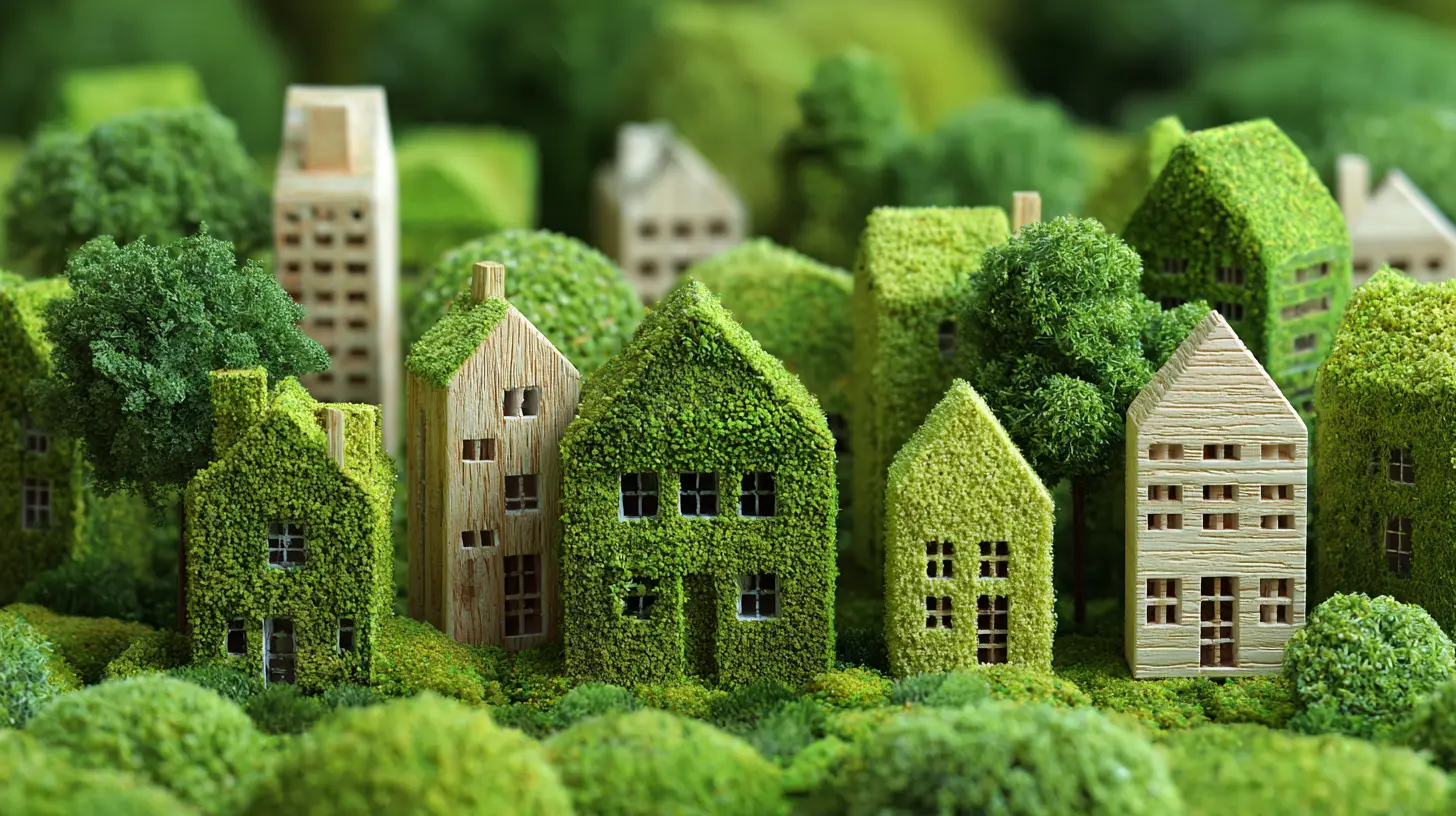
all images in this post were generated using AI tools
Category:
Housing TrendsAuthor:

Melanie Kirkland
Discussion
rate this article
2 comments
Oberon Cruz
This article highlights the crucial role of green building standards in shaping sustainable communities. It's inspiring to see how these practices will influence our future by 2027. Thank you for shedding light on such an important topic.
October 3, 2026 at 2:32 AM
Porter Harris
It's exciting to think about the future of real estate with green building standards! Embracing sustainability not only helps the planet but also creates healthier living spaces for everyone. Can't wait to see how this shapes our communities by 2027!
September 8, 2026 at 12:51 PM
Melanie Kirkland
I totally agree! The shift towards green building standards is a game changer for both the environment and our quality of life. Excited to see the progress in the coming years!