Prospects of Real Estate in Floating and Modular Cities
16 October 2026
Real estate has always followed one basic rule: location decides value. But what happens when the location itself can be built, moved, or assembled like a set of blocks? That question sits at the heart of two fast-maturing ideas, floating cities and modular cities, and both are quietly rewriting how developers, investors, and homebuyers think about property.
This is not a distant science fiction topic. Floating neighborhoods already exist in the Netherlands, modular apartment towers rise in under a year in Singapore and the United Kingdom, and coastal cities from Miami to Jakarta are studying both models as serious answers to land scarcity and climate risk. The investment case is real, but so are the traps. Let us walk through what is genuinely promising, what is overhyped, and how to think about the numbers before you commit a single dollar.
What Counts as a Floating City and a Modular City
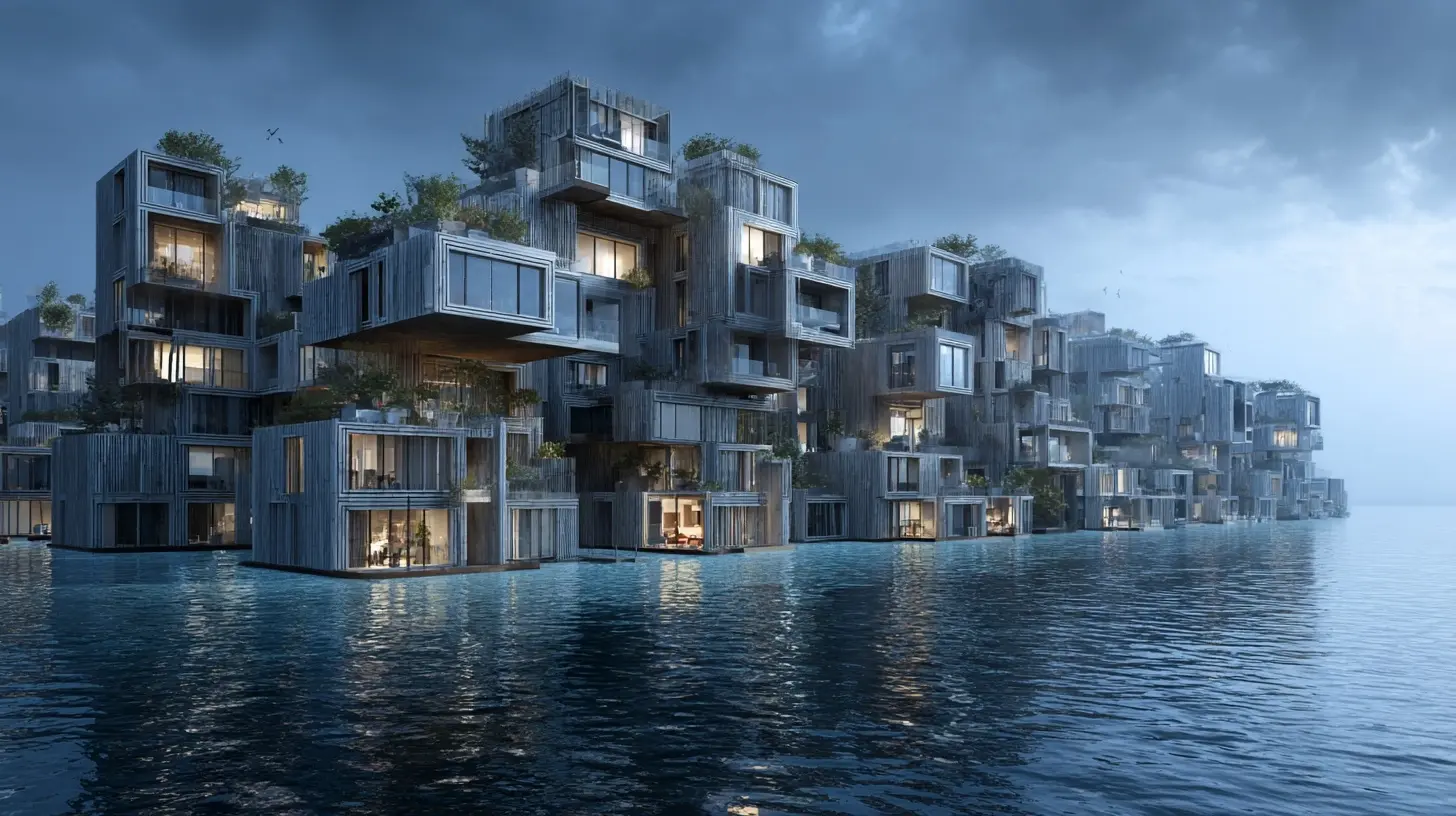
These two concepts often get blended together, yet they solve different problems.A floating city is built on water, either permanently moored or designed to rise and fall with tides and storm surges. It can be a single structure, a cluster of connected platforms, or an entire district with roads, schools, and utilities. The defining feature is that water, not land, carries the development.
A modular city is built on land, but its buildings are manufactured in factories as repeatable units and assembled on site. Some modular projects are permanent, some are designed to be disassembled and relocated. The defining feature is off-site construction, not the water.
The overlap matters because the most interesting projects combine both. A modular housing block placed on a floating pontoon is a hybrid, and hybrids are where a lot of the innovation is happening right now.
Why These Models Are Gaining Momentum
Land scarcity and cost
In dense coastal metros, developable land is either unavailable or priced beyond what most projects can support. Reclaiming land from the sea is one alternative, but it is slow, expensive, and ecologically contentious. Floating development sidesteps the land purchase entirely in some cases, though it introduces marina fees, mooring rights, and water leases that function like ground rent.Modular construction attacks the same problem from a different angle. It does not create new land, but it compresses construction timelines dramatically. A factory-built apartment module can be finished in weeks rather than months, and site work happens in parallel with manufacturing. For developers paying interest on construction loans, that time savings is often the difference between a healthy margin and a thin one.
Climate adaptation
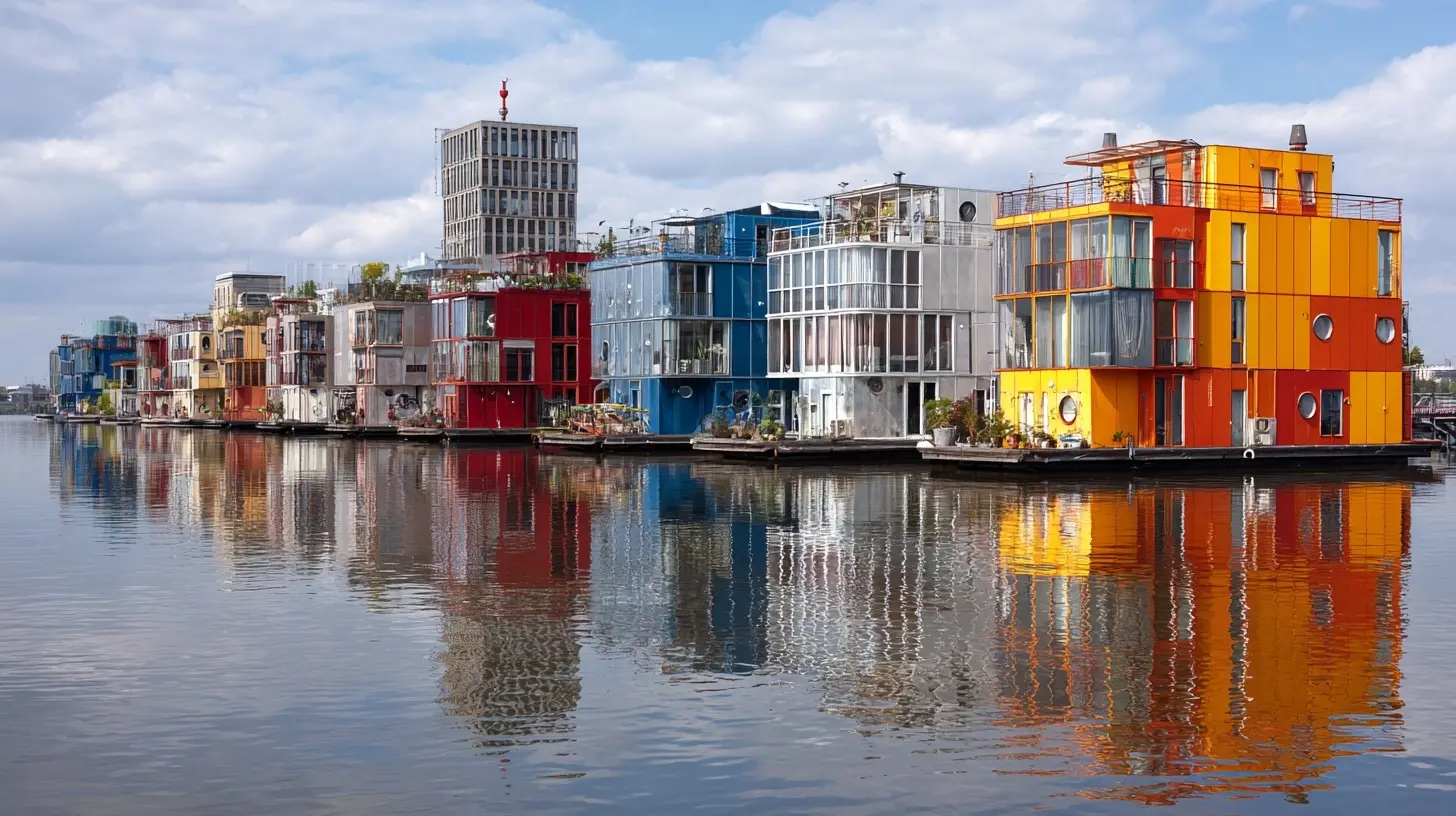
Roughly a large share of the world's population lives near a coastline, and flood risk is rising. A conventional building on a floodplain needs elevation, barriers, or insurance that may become unaffordable. A floating structure rises with the water by design. This is why Dutch developers have built entire floating neighborhoods rather than treating water as an enemy to be walled out.Modular buildings help here too, but differently. Because they can be disassembled, they suit temporary or transitional uses, such as housing displaced communities or occupying a site for ten years before it is redeveloped.
Labor and quality control
Construction sites are messy, weather-dependent, and increasingly short of skilled labor. Factory production moves much of the work indoors, where tolerances are tighter and waste is lower. The trade-off is that modular projects demand excellent logistics and early design freeze. Change orders that are routine in traditional construction can be ruinous when modules are already on a truck.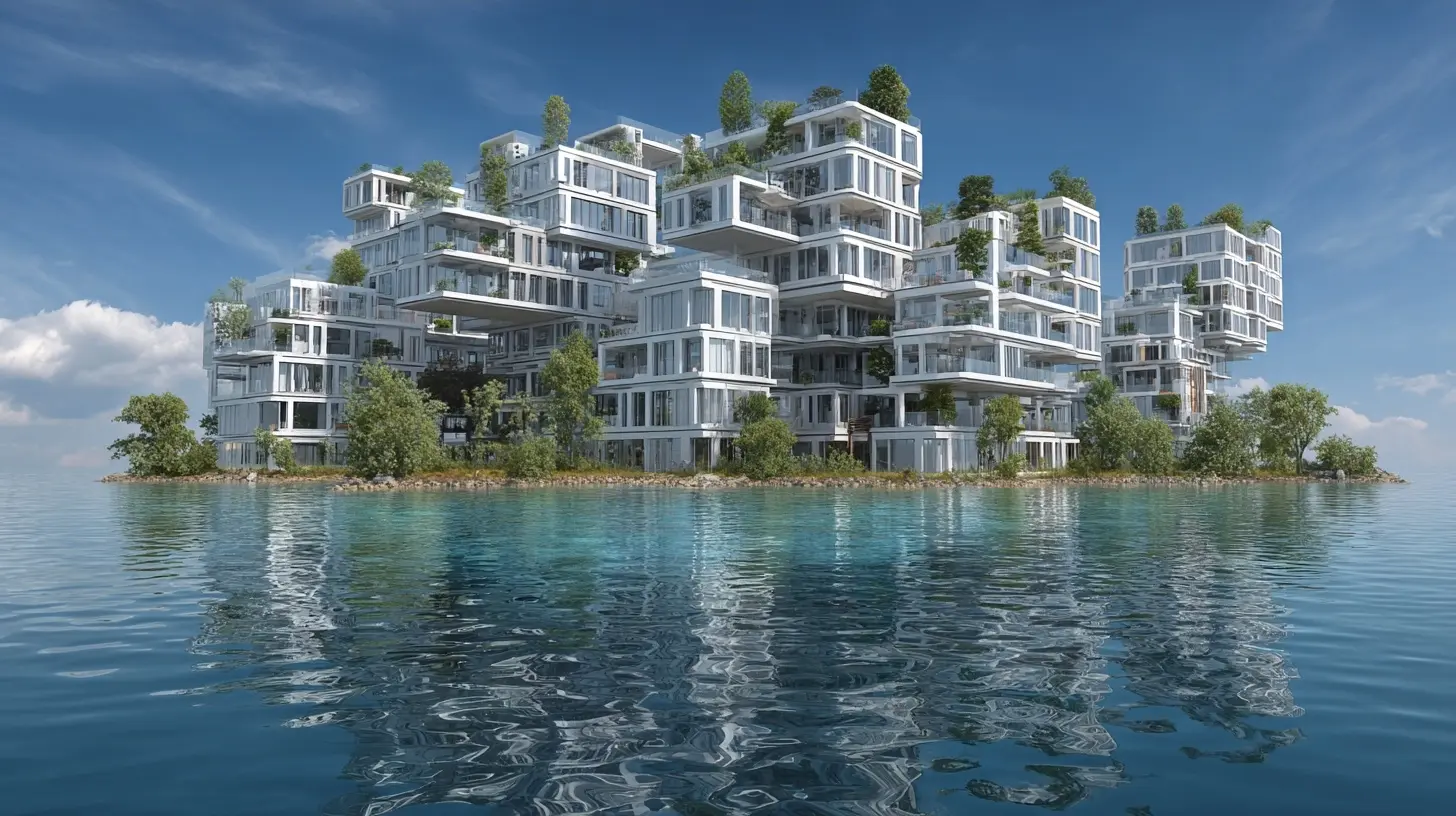
The Real Estate Prospects, Sector by Sector
Residential
Floating residential is the most visible category. Projects in the Netherlands combine floating homes with shared docks and green space, and they sell at a premium in cities where waterfront property is scarce. The buyer profile tends to be affluent and lifestyle-driven, at least in the early phases.Modular residential is broader. It spans affordable housing, student accommodation, build-to-rent, and single-family homes. The strongest prospects are in markets with acute housing shortages, stable demand, and a planning system that accepts off-site construction. The weakest are in markets where custom design and large floor plans dominate buyer expectations.
Hospitality and short-stay
Floating hotels and modular resort units are a natural fit. They can be placed in scenic locations where traditional construction is prohibited or impractical, and they can be removed if a lease ends. Operators like the flexibility. Investors like the shorter payback period compared with a conventional resort build.The catch is servicing. Housekeeping, waste, and food supply on water cost more than on land. Any hospitality pro forma needs a realistic line for marine logistics, not a guess.
Commercial and mixed use
Modular offices and retail pods are gaining ground for pop-up and interim uses. A developer holding a site for five years before a tower goes up can generate income from modular retail instead of leaving the lot empty. Floating commercial space is rarer, mostly because foot traffic on water is limited unless the location is already a destination.Industrial and logistics
Modular warehouses and data centers are an underrated prospect. Standardized, repeatable structures suit industrial tenants who care about function, not architectural flair. Floating industrial platforms remain niche, but they appear in ports and aquaculture, where proximity to water is an operational advantage rather than a novelty.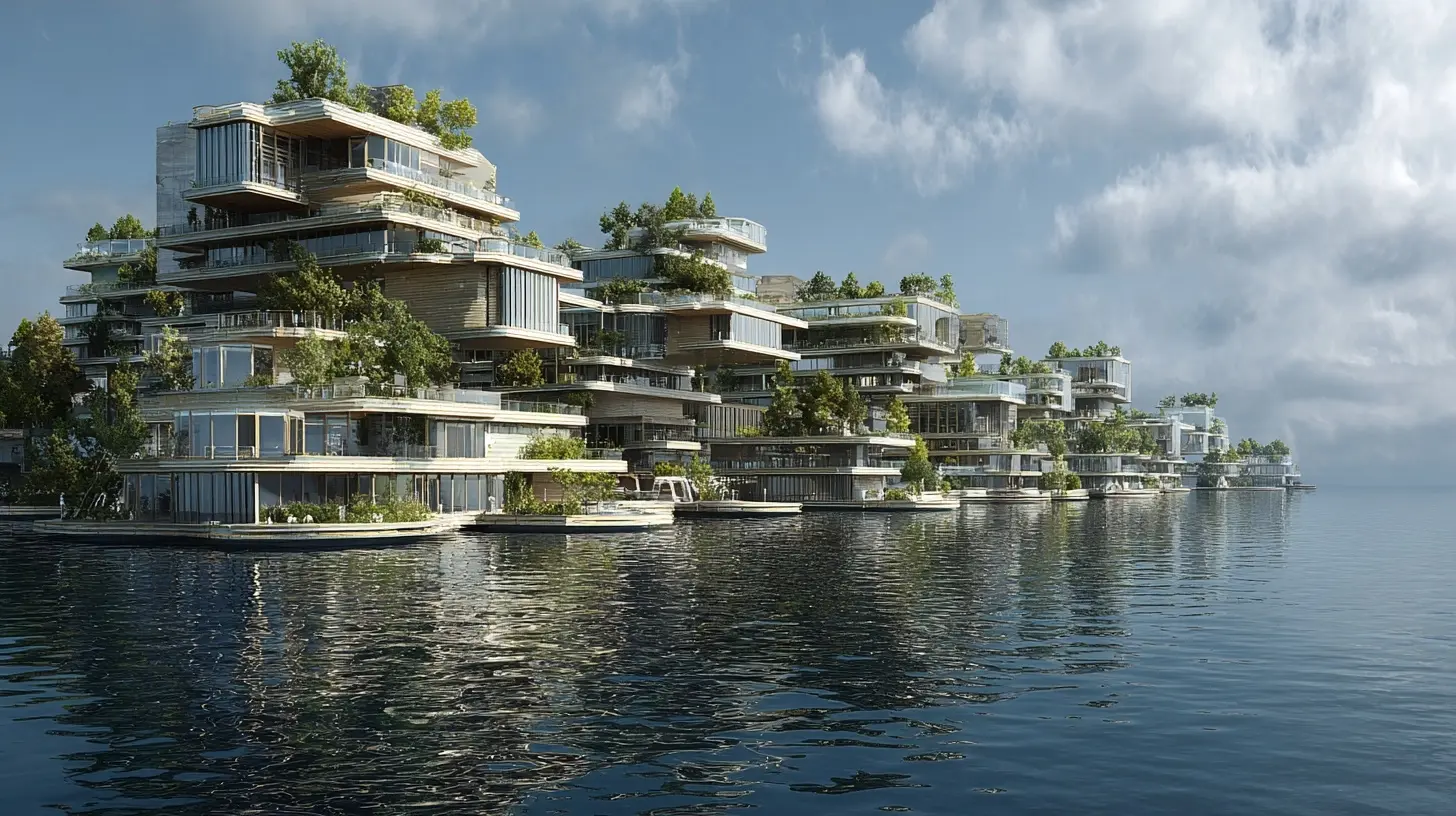
The Economics: What Actually Drives Returns
Capital expenditure
Floating construction typically carries a higher upfront cost per square meter than conventional building, mainly because of the hull or pontoon, mooring systems, and marine-grade materials. Modular construction can be cheaper per unit at scale, but only if the factory runs near capacity. A half-empty module factory is an expensive way to build.Operating expenditure
This is where many pro formas fall apart. Floating assets need inspections, hull maintenance, pump systems, and insurance that is often priced with a marine rather than a property mindset. Modular assets need fewer structural repairs but may face higher costs for replacements if the manufacturer has gone out of business and the module dimensions are proprietary.Financing
Traditional mortgage lenders are cautious about both categories. Floating homes may be financed like boats in some jurisdictions, with shorter terms and higher rates. Modular buildings are increasingly accepted, but lenders often want the modules permanently affixed to a foundation before they treat the asset as real property. That distinction affects everything from loan-to-value ratios to resale.Exit strategy
Ask a simple question before investing: who buys this from me, and how? A floating home in a city with a waiting list for moorings is liquid. A floating home in a region with no regulatory framework for water leases is not. A modular apartment in a strong rental market is sellable. A modular building with a unique, non-standard module size is a stranded asset if the manufacturer disappears.Regulatory and Legal Realities
This is the least glamorous section and the one that kills the most projects.Ownership of water is rarely simple. In many countries, the state owns the seabed, the municipality controls the shoreline, and a separate authority manages navigation. A floating development may need agreements with all three. Mooring rights can be time-limited, which means a buyer may own a structure but lease the right to keep it in place.
Modular buildings face a different maze. Planning rules may treat them as permanent structures, temporary structures, or something in between. Building codes written for site-built construction do not always map cleanly onto factory-built units, and certification requirements vary by jurisdiction.
Practical advice: before any design work, commission a legal and regulatory review specific to the exact site and the exact ownership model you intend to sell. Do not assume that a successful project in one city can be replicated in another without a fresh review.
Common Mistakes and Misconceptions
Mistake one: treating floating cities as a solution to affordable housing. They are not, at least not yet. The cost structure currently points toward premium or niche markets. Modular construction has a far stronger affordability case.Mistake two: assuming modular means low quality. Factory production often improves precision. The quality risk lies in transport damage and poor site assembly, not in the module itself.
Mistake three: ignoring insurance until the end. Insurance can make or break the operating budget. Get indicative quotes early, before you commit to a design.
Misconception: floating cities are immune to climate risk. They handle sea-level rise well, but they still face extreme waves, wind, and debris. Engineering standards matter enormously.
Misconception: modular is always faster. It is faster when design is frozen early and logistics are planned. It can be slower when approvals lag or when modules sit in a yard waiting for site readiness.
Best Practices for Developers and Investors
1. Lock the design before manufacturing begins. Late changes are the single biggest cause of modular budget overruns.2. Build a marine or logistics cost model from day one if water is involved. Do not bolt it on later.
3. Secure regulatory approvals in principle before spending on detailed design.
4. Choose module dimensions that are standard in your market, so future buyers are not locked into one supplier.
5. Stress-test the exit. Model resale to a normal buyer, not just to another specialist.
6. Partner with a manufacturer who has a track record and a service network, not just a low price.
7. Plan for maintenance from the start, especially for floating assets where pumps and moorings are critical systems.
What to Watch Over the Next Decade
Expect three trends to shape the prospects of both models.First, standardization. As more jurisdictions adopt clear rules for floating foundations and modular certification, financing and insurance will become easier, and costs will fall.
Second, hybrid projects. Modular buildings on floating platforms, and floating elements added to conventional developments, will become more common than either pure model.
Third, climate-driven demand. Cities facing repeated flooding will increasingly treat floating and relocatable construction as part of their adaptation toolkit, not as an experiment.
A Balanced Final Word
The prospects for real estate in floating and modular cities are genuinely bright, but they are not uniform. Modular construction already has a credible commercial case in many markets, particularly where speed, labor shortages, and repeatability matter. Floating development is earlier in its curve, with stronger prospects in wealthy coastal cities that have both the regulatory will and the engineering expertise to support it.The investors who do well here will be the ones who treat these as distinct asset classes with distinct risks, not as a single futuristic trend. Do the legal work, model the marine or logistics costs honestly, and think hard about who the end buyer is. Do that, and these new frontiers of real estate can offer returns that traditional development simply cannot match.
all images in this post were generated using AI tools
Category:
Real Estate OpportunitiesAuthor:

Melanie Kirkland