Suburban vs. Urban Living: A Side-by-Side Comparison for 2027
6 September 2026
The decision between city life and the suburbs has never been a simple one, but the calculus has shifted dramatically in the last few years. The pandemic-era migration patterns, the rise of hybrid work, and a persistent affordability crisis have scrambled the old assumptions. By 2027, the question is no longer just about commute times and square footage. It is about resilience, lifestyle design, and what you are willing to trade away.
This guide is not a cheerleader for either side. It is a practical, unvarnished look at what each environment actually delivers, where they fail, and how to choose based on your specific circumstances. If you are on the fence, you will leave with a clear framework for making the call.
The Core Question Has Changed
For decades, the standard advice was simple: live in the city when you are young, then move to the suburbs when you have kids and need schools and a yard. That linear path is now broken. Remote and hybrid work has uncoupled your home address from your office zip code. A 2026 survey from a major real estate analytics firm suggested that over 35 percent of full-time employees in the United States still work in a hybrid arrangement, and that number is expected to hold steady into 2027. That means millions of households no longer need to optimize for a daily commute.Instead, the real question for 2027 is: which environment gives you the most control over your time, your money, and your daily stress? The answer depends on how you value density, convenience, space, and community.
The Financial Reality Check
Let us start with the numbers, because ignoring them is how people end up house poor in either setting.Urban Cost Structures in 2027
Urban living remains the premium option in most metros, but the premium is shrinking in specific ways. Condo prices in core downtown areas of cities like Chicago, Houston, and Philadelphia have seen modest corrections since the 2022 peak. However, rental rates in walkable neighborhoods have stayed stubbornly high due to low vacancy. If you are buying in a city, you are paying for the land and the location, not the structure. A 900-square-foot condo in a desirable urban district can easily cost the same as a 2,200-square-foot house with a yard thirty minutes away.The hidden costs of urban life are often underestimated. Parking is the obvious one. A dedicated garage spot in a city building can run you an extra $300 to $700 per month, or add $50,000 to the purchase price. Then there is the HOA fee, which in older high-rises can be brutal. A $1,200 monthly HOA on a $600,000 condo is not unusual, and that money is gone forever. You are not building equity with it.
The offset is that you need less stuff. City dwellers tend to own fewer cars, less lawn equipment, and smaller furniture. Your utility bills are lower because you are heating and cooling less space. And you have access to amenities that suburbanites pay for separately: gyms, pools, roof decks, and concierge services.
Suburban Cost Structures in 2027
Suburban housing is not cheap anymore. The great migration of 2020 and 2021 pushed prices in bedroom communities up by 30 to 40 percent in many markets, and they have not come back down. What you are buying in the suburbs is not just a house; you are buying a system of ownership. Roofs, water heaters, and HVAC systems are all your responsibility. A $15,000 emergency fund for home repairs is not optional; it is mandatory.Property taxes are the silent killer in the suburbs. Many desirable school districts carry mill rates that translate to $8,000 to $15,000 per year in taxes on a median-priced home. That is a permanent monthly payment that never goes away. You also need cars. In most suburban areas, a two-car household is the baseline, and with average new car prices hovering near $48,000, that is a significant capital outlay plus insurance, fuel, and maintenance.
The trade-off is that you get equity in a physical asset that historically appreciates, and you get control. You can renovate, garden, and build a workshop. You are not at the mercy of a condo board or a landlord.
The True Cost Per Square Foot
A more honest comparison is cost per usable square foot, adjusted for lifestyle. In the city, you pay a high price per square foot but use nearly all of it. In the suburbs, you pay a lower price per square foot but pay for space you do not use every day: the formal dining room, the guest bedroom, the three-car garage. For a couple or a single person, that unused space is a liability. For a family of five, it is a necessity.
Commute and Time: The New Math
The old rule was that a commute under 45 minutes was acceptable. By 2027, the rule is about commute predictability, not just duration. A 25-minute train ride that runs on time is far better than a 15-minute car ride that turns into 50 minutes during a school event or an accident.Urban Commuting in 2027
If you work in a central business district, urban living is still the time winner. You can walk, bike, or take transit. The rise of micro-mobility options like e-bikes and scooters has made the last-mile problem nearly obsolete in most major cities. The average urban commuter spends about 20 minutes each way, according to recent transportation studies.But there is a catch. Public transit systems in many cities are facing fiscal cliffs. Service cuts on weekends and evenings are becoming common. If you rely on a bus that comes every 30 minutes and it gets canceled, you are stranded. Urbanites need a backup plan: a bike, a car-share membership, or the willingness to pay for a ride-share.
Suburban Commuting in 2027
The suburban commute has gotten worse, not better. As more companies mandate three days in the office, the roads are filling back up. The 2027 reality is that suburban commuters who drive to a downtown job are spending an average of 60 to 90 minutes per day in the car. That is 250 to 375 hours per year. If you value your time at $30 per hour, that is a hidden cost of $7,500 to $11,250 annually.The smarter suburban play is to live near a commuter rail line. Towns with train stations are more expensive, but they offer a different lifestyle: you can read, work, or nap during the commute. The trade-off is that you are tied to the train schedule. Miss the 6:15 and you are waiting until 7:10.
The Hybrid Work Advantage
If you only go into the office two days per week, the commute math changes entirely. A 60-minute commute twice a week is 120 minutes per week, which is manageable. In that scenario, the suburbs become far more attractive because you get the space and the quiet for the other five days. The key is to be honest about your actual schedule. Do not assume you will be remote forever. The trend in 2027 is toward more in-office days, not fewer.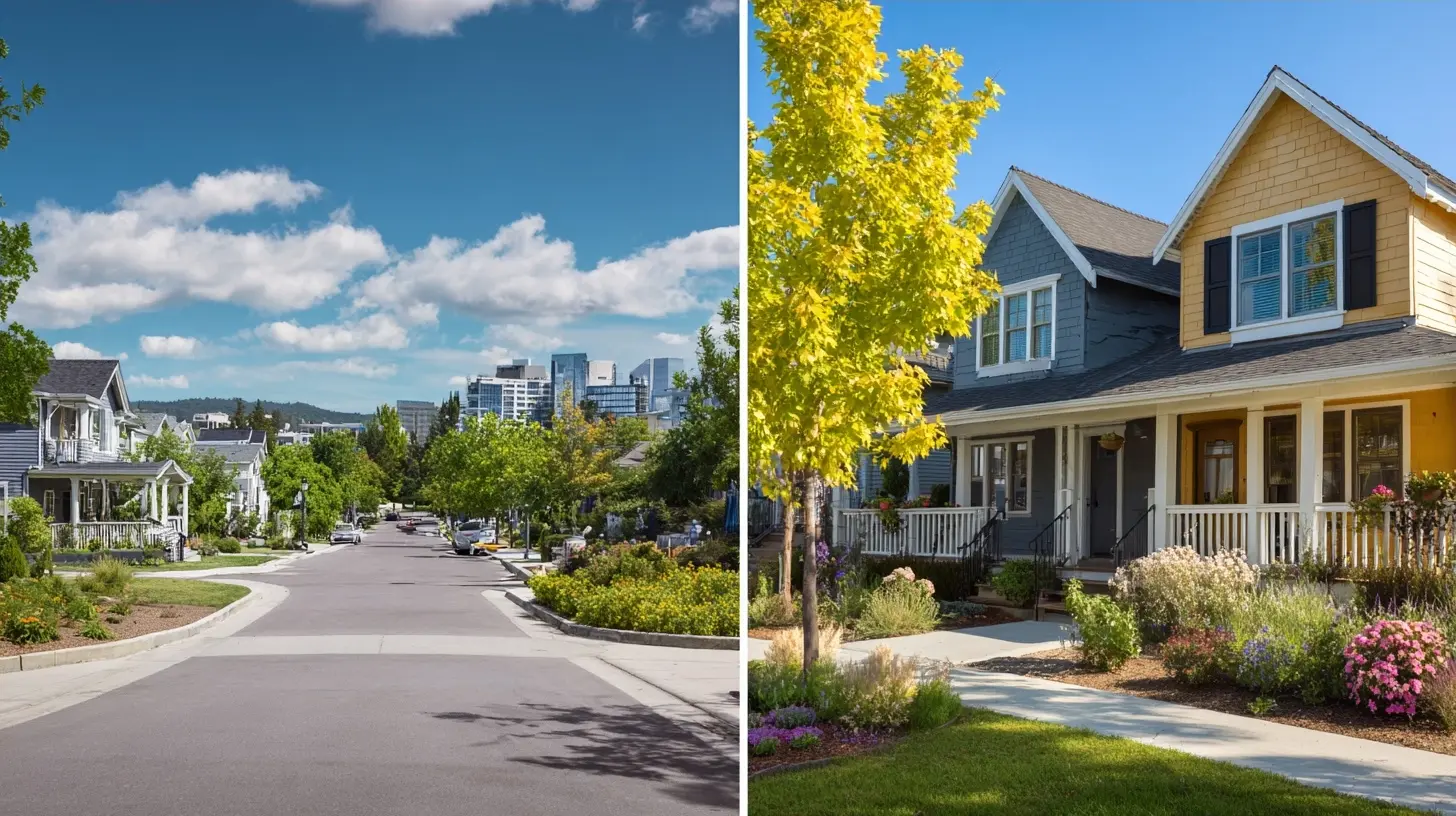
Space and Lifestyle: What You Actually Get
The Urban Floor Plan
Urban living in 2027 is about efficiency. Newer condos and apartments are designed with open concepts, built-in storage, and multi-functional furniture. You will see more murphy beds and fold-down desks than ever before. The average new urban unit is around 750 square feet for a one-bedroom, which is small but workable if you are disciplined about clutter.The real luxury of urban living is not inside your unit; it is outside your front door. You have coffee shops, restaurants, parks, and cultural institutions within a 10-minute walk. Your living room extends to the neighborhood. For people who hate maintaining a house, this is liberating. You do not mow a lawn; you walk to a park. You do not shovel snow; you walk past a doorman who handles the sidewalk.
The downside is noise and lack of privacy. You will hear your neighbors. You will smell their cooking. You will deal with street noise, sirens, and the occasional drunk person at 2 a.m. If you are sensitive to sensory overload, urban living can be exhausting.
The Suburban Floor Plan
Suburban homes in 2027 are bigger than ever. The average new single-family home is over 2,400 square feet, and many have home offices, gyms, and media rooms. The pandemic taught people that they need dedicated spaces for work and school, and builders have responded. If you work from home, having a separate office with a door is a game-changer for mental health.The yard is the defining feature. For some, it is a sanctuary: a place for kids to play, dogs to run, and gardens to grow. For others, it is a burden. A quarter-acre lot requires mowing, weeding, edging, and watering. If you do not enjoy that work, you will either pay someone $200 per month or resent every Saturday morning spent on it.
Suburban living also means driving everywhere. There is no corner bodega. A quick trip to the store for milk is a 15-minute round trip by car. This errand tax adds up. Studies have shown that suburban residents spend an average of 30 percent more time on errands than urban residents, simply because of the distances involved.
Community and Social Life
The Urban Social Network
Cities are places of weak ties. You see the same barista, the same dog walker, the same neighbors in the elevator. These interactions are brief but frequent. Sociologists call this "high-density social capital." It is great for serendipity: you run into people, you make spontaneous plans, you feel connected to a larger whole.But deep friendships are harder to form in cities. People move often. Apartment buildings have high turnover. You might have a great conversation with a neighbor and then never see them again because they moved to the suburbs six months later. Urban social life requires active effort: joining clubs, attending events, and consistently showing up to the same places.
The Suburban Social Network
Suburbs are places of strong ties. Your neighbors are likely to stay for years. Your kids go to school together. You see the same parents at soccer practice and the same families at block parties. This creates deep, lasting relationships that are invaluable when you need help or support.The downside is that suburban social life is often centered on children. If you do not have kids, it can be isolating. Many suburban adults report feeling lonely, especially if they moved there without an existing friend group. The social calendar is built around school events, and if you are not part of that world, you can feel like an outsider.
The best suburban communities have active adult organizations, book clubs, and volunteer groups. But you have to seek them out. They do not come to you.
Schools and Family Considerations
This is the most emotionally charged part of the decision. For parents, the quality of schools is often the deciding factor.Urban Schools in 2027
Urban school districts are a mixed bag. Some have excellent magnet schools and gifted programs. Others struggle with overcrowding and underfunding. The reality is that in most major cities, the best public schools are in the wealthiest neighborhoods, and getting your child into them often requires living in a specific catchment area or winning a lottery.Private school is an option, but it is expensive. Urban private school tuition in 2027 ranges from $20,000 to $45,000 per year per child. For a family with two kids, that is a mortgage payment every month.
Suburban Schools in 2027
Suburban school districts are generally more consistent in quality. They have larger tax bases, more parent involvement, and fewer administrative challenges. If you buy in a top-rated district, you are almost guaranteed a solid education for your child.But there is a catch. Suburban schools are facing their own challenges in 2027: declining enrollment in some areas, teacher shortages, and the lingering effects of learning loss from the pandemic. The top-rated district from 2019 might not be the top-rated district in 2027. Do not buy a house based solely on a school rating from five years ago. Talk to current parents, visit the schools, and check the district's financial health.
The Childcare Factor
For working parents, childcare is a huge variable. Urban areas have more childcare options, including centers that are open longer hours and are closer to workplaces. Suburban childcare is often more expensive because there is less competition, and you may need to drive your child to a provider that is not on your way to work.Health and Wellness
Urban Health Benefits
Urban living is correlated with lower obesity rates. You walk more, you bike more, and you are more likely to use stairs. The constant incidental exercise adds up. A 2025 study in the Journal of Urban Health found that urban residents take an average of 3,000 more steps per day than their suburban counterparts.Air quality is a concern, though it is improving in many cities due to stricter emissions standards. Noise pollution is a real issue. Chronic exposure to traffic noise has been linked to higher stress and cardiovascular problems.
Suburban Health Benefits
Suburban living offers more access to nature. You have a yard, nearby parks, and quieter streets. This is beneficial for mental health. The ability to step outside and hear birds instead of sirens is undervalued.The downside is that suburban life is car-dependent. You sit more. You drive to the gym instead of walking to it. You are more likely to run errands by car, which means you are less likely to get incidental exercise. Suburban residents have higher rates of sedentary behavior.
The 2027 Wildcards
There are three emerging factors that will shape this decision over the next few years.Climate Resilience
By 2027, climate risk is a mainstream consideration. Coastal cities face hurricane and flooding risks. Inland suburbs face wildfire and heat risks. Before you buy anywhere, check the flood maps and fire risk zones. Insurance premiums are rising in high-risk areas, and some insurers are pulling out entirely. A beautiful home in a fire-prone zone might be uninsurable within a decade.The 15-Minute City Concept
Urban planners are pushing for neighborhoods where residents can meet most of their daily needs within a 15-minute walk or bike ride. This is not just a city thing. Some progressive suburbs are redesigning their town centers to include mixed-use developments, grocery stores, and offices within walking distance of residential areas. If you can find a suburb with this kind of planning, you get the best of both worlds.The Rise of the "Middle Suburb"
The old dichotomy of "urban core" and "outer ring" is fading. The most desirable areas in 2027 are the "middle suburbs": the first-ring communities built in the 1950s and 1960s that have mature trees, smaller lots, and access to transit. These areas offer a compromise: you are 20 minutes from downtown, but you have a yard and a neighborhood feel. They are often more affordable than both the city center and the far exurbs.A Practical Decision Framework
If you are struggling to choose, work through this checklist.First, calculate your true commute time for the next five years. Do not use the best-case scenario. Use the average, and include the time you spend parking or walking from the train.
Second, list your non-negotiable daily activities. If you go to the gym five times a week, how far is the gym? If you have a dog, where does it walk? If you love cooking, how close is a good grocery store?
Third, be honest about your tolerance for maintenance. Some people find mowing the lawn meditative. Others find it soul-crushing. There is no wrong answer, but you need to know which one you are.
Fourth, project your life five years out. Are you planning to have children? Are you planning to change jobs? Are your parents getting older and needing your help? The right choice today might be the wrong choice in three years.
Finally, rent before you buy. If you are moving from the city to the suburbs, rent a house for a year. If you are moving from the suburbs to the city, rent an apartment for a year. This is the single best way to avoid a costly mistake. You will learn more in one month of living in a place than in a hundred hours of research.
Common Mistakes to Avoid
The biggest mistake is assuming that one choice is morally superior. Urban living is not "better" for everyone, and suburban living is not "giving up." They are different tools for different jobs.Another mistake is buying the maximum house you can afford in the suburbs without accounting for the hidden costs: property taxes, maintenance, commuting, and the need for a second car. Similarly, buying a condo in the city without checking the HOA's reserve fund is a recipe for a special assessment nightmare.
A third mistake is ignoring the neighborhood's trajectory. A suburb with a dying downtown and an aging population might be cheap now, but it will be hard to sell later. A city neighborhood that is rapidly gentrifying might be expensive now, but it will be even more expensive later. Look for areas with stable or growing employment, new development, and a mix of ages.
The Verdict
There is no universal answer for 2027. The best choice depends on your stage of life, your financial situation, and your personality.If you value convenience, cultural density, and minimal upkeep, and you can afford the premium, urban living is hard to beat. The city is a machine for experiences.
If you value space, privacy, and long-term community roots, and you are willing to take on the responsibilities of homeownership, the suburbs offer a stability that the city cannot match. The suburb is a machine for family life.
The good news is that you are not making a permanent decision. People move back and forth throughout their lives. The goal is not to find the perfect place forever. The goal is to find the right place for the next chapter.
Choose based on who you are today, not who you think you should be. And when that changes, do not be afraid to move again. That flexibility is the real luxury.
all images in this post were generated using AI tools
Category:
Suburban HomesAuthor:

Melanie Kirkland
Discussion
rate this article
2 comments
Astranor James
Great insights! It's fascinating to see how the urban and suburban landscape is evolving. Excited to see where people choose to live!
September 30, 2026 at 11:56 AM
Asher McKale
As preferences shift, understanding the evolving dynamics between suburban and urban living will be essential for future homeowners and investors.
September 18, 2026 at 4:32 AM