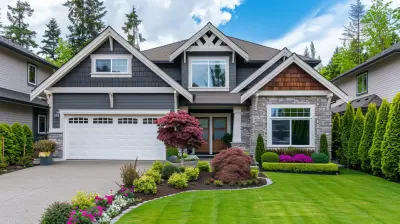
Where First-Time Homebuyers Should Look in 2026
7 September 2026
The 2026 housing market will not reward hesitation, but it will reward precision. For first-time buyers, the challenge is no longer simply finding a property. It is finding the right geography, the right price point, and the right financial structure in a market that has fundamentally shifted since the pandemic boom. The days of bidding wars on suburban starter homes with 3% down payments are largely over. What remains is a more fragmented, more regional, and more strategic buying environment.
If you are entering the market for the first time next year, the question is not "Can I afford a house?" It is "Where can I still buy a house that I can afford to keep?" This article breaks down the specific metros, neighborhoods, and property types that will matter in 2026, along with the trade-offs you need to understand before you commit.

The Macro Reality of 2026: Why Location Matters More Than Price
Mortgage rates have settled into a range that many analysts expect to hold through 2026: roughly 5.5% to 6.5% for a 30-year fixed loan. That is not the 3% environment of 2021, nor is it the 8% panic of late 2023. It is a plateau. For first-time buyers, this means your monthly payment is less sensitive to rate fluctuations than to the purchase price itself. A $50,000 difference in home price now outweighs a full percentage point in rate for most budgets.This is why the specific metro and neighborhood you choose carries so much weight. In high-cost coastal cities, the median price-to-income ratio has pushed past 8-to-1. In secondary markets, that ratio often sits between 3.5 and 5.5. The same monthly budget that buys a 900-square-foot condo in San Jose will buy a 1,800-square-foot detached house with a yard in Grand Rapids or Knoxville. That is not a lifestyle preference. That is a mathematical reality that will shape your financial flexibility for the next decade.
But the reverse is also true. Buying in a cheaper market may lower your monthly payment, but it can also cap your wage growth, limit your resale pool, and expose you to slower appreciation. The trade-off is not just between square footage and commute. It is between liquidity and stability, between job density and space.

The Mid-Sized Metro Sweet Spot: Where Inventory Still Exists
Large coastal metros are not where first-time buyers should focus in 2026, unless they have substantial family help or a very high dual income. Instead, the strongest opportunities are in mid-sized metros that have seen population growth without the corresponding price explosion of the Sun Belt's hottest spots.The Great Lakes Belt: Cleveland, Pittsburgh, and Milwaukee
These cities have been dismissed for years as "rust belt relics," but that narrative is outdated. Cleveland's inner-ring suburbs like Lakewood and Shaker Heights offer solid brick colonials in the $180,000 to $260,000 range. Properties need cosmetic updates rather than structural overhauls, and the rental market is strong enough that if you outgrow the home, you can convert it to a rental rather than selling at a loss.Pittsburgh's East End neighborhoods, particularly Swissvale and Wilkinsburg, are seeing a slow but steady influx of first-time buyers priced out of the more trendy Lawrenceville and Shadyside areas. The key advantage here is property tax stability and the absence of bidding wars. In 2025, homes in these areas sat on the market for an average of 45 days, compared to 12 days in Denver or 9 in Austin. That gives you time for a thorough inspection and a realistic negotiation.
Milwaukee's south side, especially around Bay View and the Lincoln Village area, offers a similar dynamic. The city has a strong rental market, a growing tech and healthcare employment base, and home prices that have only risen about 4% annually over the past three years. That is not exciting, but it is sustainable. You are not buying for a quick flip. You are buying a base of operations that will not destroy your budget.
The Ohio River Corridor: Cincinnati and Louisville
Cincinnati's price growth has been remarkably controlled. The neighborhoods of Northside, College Hill, and Madisonville offer homes between $200,000 and $300,000. These are not fixer-uppers in the sense of needing new roofs and electrical systems. They are older homes with mature trees, decent schools, and layouts that work for families. The city has invested heavily in its streetcar and bus rapid transit lines, which means you can live slightly further out without being car-dependent for every errand.Louisville is often overlooked because it is not a "tech hub" or a "destination city." That is precisely why it works. The Highlands and Germantown neighborhoods have a mix of shotgun cottages and craftsman bungalows, many priced under $250,000. The property taxes are low, the insurance rates are moderate, and the local economy is diversified across healthcare (Humana, Norton), logistics (UPS Worldport), and advanced manufacturing (Ford's Louisville plants). For a first-time buyer, Louisville offers one of the lowest total monthly costs of homeownership in the country when you factor in taxes, utilities, and commuting.
The Hidden Value in the Southeast: Not Atlanta, Not Nashville
Everyone knows Atlanta and Nashville have become expensive. What fewer people discuss is the second ring of Southeastern cities that are absorbing the overflow.Richmond, Virginia
Richmond is a case study in patience. The city's north side, particularly the Bellevue and Ginter Park neighborhoods, has beautiful early 20th-century homes. Many are priced between $300,000 and $375,000, which is high compared to the Midwest, but low compared to the DC suburbs just two hours north. Richmond's advantages are its stability and its job market. The state government, Virginia Commonwealth University, and a growing fintech sector (Capital One has a massive campus there) provide a steady base of white-collar employment.The trade-off is that Richmond's housing stock is old. You will deal with knob-and-tube wiring, cast iron pipes, and foundation settling. Do not waive inspections here. Budget an extra $15,000 to $25,000 for immediate repairs. The long-term appreciation is steady, not spectacular, but the resale market is deep.
Greenville, South Carolina
Greenville has been on "best places to live" lists for a decade, but the price increases have been more measured than in Charleston or Asheville. The West End and North Main areas are established, but the neighborhoods just outside the downtown loop, like Alta Vista and Nicholtown, still offer entry points in the $280,000 to $350,000 range. The manufacturing base (BMW, Michelin, GE) pays well, and the cost of living is roughly 15% below the national average.The caution here is flood zones. South Carolina has seen increasingly severe rain events. Always check FEMA flood maps before making an offer. A home that seems like a bargain in February can become a liability in August. Work with a local agent who knows drainage patterns, not just listing prices.

The Surprising Case for Smaller Rust Belt Cities
If your primary goal is to own a home with a monthly payment under $1,200, you need to look at cities that have lost population but stabilized their economies.Dayton, Ohio
Dayton is not glamorous. But its housing market is one of the most affordable in the country for buyers with steady income. You can find a three-bedroom, two-bath home in good condition in the Oakwood or Kettering suburbs for $150,000 to $200,000. These are well-built homes from the 1950s and 1960s, often with updated kitchens and roofs because the previous owners have already done the work. The downside is that the rental market is softer, so if you need to move within five years, you may have to sell at a modest loss. This is a buy-and-hold city, not a flip city.South Bend, Indiana
South Bend has benefited from the University of Notre Dame's expansion and a growing medical device sector. The Near Northwest Neighborhood and the Howard Park area have seen targeted reinvestment. Homes in the $120,000 to $180,000 range are common. The property taxes are low, and Indiana has a homestead deduction that significantly reduces assessed value for owner-occupants. The risk is that the local economy is still tethered to a few large employers. If you work remotely for a company based elsewhere, this is a strong option. If you need local employment, make sure your job offer is solid before you buy.The Rental Arbitrage Strategy: Buy Where Renters Are Priced Out
One of the most underappreciated strategies for first-time buyers in 2026 is to buy in a neighborhood where the rent-to-mortgage ratio is inverted. In many mid-sized cities, the monthly cost of owning (including taxes, insurance, and maintenance) is now lower than the cost of renting a comparable unit. This is not true in most coastal metros, but it is very true in places like Indianapolis, Oklahoma City, and El Paso.Indianapolis
Indianapolis is the poster child for this dynamic. The median rent for a two-bedroom apartment is around $1,400. A mortgage on a $220,000 home with 5% down at 6% interest, including taxes and insurance, is roughly $1,650. The gap is narrow, but the equity you build is real. The neighborhoods of Irvington, Fountain Square, and Meridian-Kessler offer a range of housing types, from craftsman bungalows to ranch homes. The city has no zoning for large apartment complexes in many inner neighborhoods, which limits future rental supply and supports single-family home values.Oklahoma City
Oklahoma City's housing market has been consistently affordable for a decade. The Plaza District and the Paseo area have become trendy, but the surrounding blocks still have homes under $200,000. The biggest risk here is weather-related insurance. Hail and wind damage are common, and premiums have risen sharply. Factor a $300 to $500 monthly insurance cost into your budget, not the national average. If you can handle that, the total cost of ownership is still low.
The Condo and Townhome Compromise: Not a Failure, a Strategy
Many first-time buyers in 2026 will not buy a detached single-family home. That is not a concession. It is a rational choice in high-cost areas where land is scarce. Condos and townhomes offer lower entry prices, reduced exterior maintenance, and often better locations.The Chicago Example
Chicago's condo market has softened. Downtown high-rises that sold for $500,000 in 2021 are now listed at $400,000 or less. This is partly due to higher association fees and partly due to a shift in demand toward the suburbs. For a first-time buyer, this creates an opportunity. A two-bedroom condo in Lakeview or Lincoln Park can be found in the $350,000 to $450,000 range. The association fees are high, often $600 to $900 per month, but they cover heat, water, exterior insurance, and building maintenance. You are effectively pre-paying for maintenance that a single-family homeowner would handle in irregular, expensive bursts.The critical due diligence here is the association's reserve fund. Do not buy a condo in a building with a poorly funded reserve. Ask for the last two years of meeting minutes and the most recent reserve study. If the board has deferred maintenance on the roof or the elevator, you could face a special assessment of $20,000 or more within your first two years of ownership.
The FHA and Down Payment Assistance Trap
A common mistake first-time buyers make is assuming that a 3.5% down FHA loan is always the best route. In competitive markets, FHA loans are often rejected by sellers because they come with stricter appraisal and property condition requirements than conventional loans. In 2026, in a market where inventory is still tight in desirable areas, a conventional loan with 5% down and a higher credit score is a stronger offer.Better options include state-level down payment assistance programs. Many states offer silent second mortgages or grants that cover the down payment and closing costs. For example, the Ohio Housing Finance Agency, the Indiana Housing and Community Development Authority, and the Michigan State Housing Development Authority all have programs that offer up to 5% of the purchase price as a forgivable loan if you stay in the home for five years. These are not widely advertised, and many agents do not bring them up because they add paperwork. You need to ask.
The trade-off is that these programs often require you to complete a homebuyer education course and may have income limits. But if you qualify, they can reduce your upfront cash requirement from $15,000 to $3,000.
The Hidden Cost of "Affordable" Areas: Insurance and Taxes
The biggest mistake in 2026 is looking only at the purchase price. Home insurance premiums have risen dramatically in coastal states, particularly Florida, Louisiana, and parts of Texas. A $250,000 home in Tampa may carry an annual insurance premium of $6,000 to $9,000, if you can even find a carrier. The same home in Cleveland might cost $1,200 per year.Property taxes are equally variable. New Hampshire and Texas have high effective property tax rates, often above 2% of home value annually. In contrast, Hawaii and Colorado have rates below 0.6%. A $300,000 home in Texas could mean $7,500 per year in property taxes. The same home in Colorado might only cost $1,800. Over a 30-year mortgage, that difference is over $170,000.
When you compare markets, always calculate the total monthly cost of ownership (PITI plus maintenance) rather than the mortgage principal and interest. A home with a lower price but higher taxes and insurance can be more expensive than a home in a moderate-tax state with a slightly higher purchase price.
The Remote Work Wildcard: Where You Can Live vs. Where You Should Live
Remote work has not disappeared, but it has tightened. Many companies now require hybrid schedules, which means you need to be within a two-hour drive of a major office hub. This creates a specific geography of opportunity.For example, if you work for a company with offices in Philadelphia, you can look at Lancaster, Pennsylvania, or Wilmington, Delaware. Both offer homes in the $250,000 to $350,000 range, significantly lower than the $450,000 average in Philadelphia proper. The commute is manageable two or three days a week. Similarly, if your office is in Dallas, look at Denton or McKinney, but also consider Sherman, Texas, which is an hour north and has homes under $250,000.
The risk is that remote work policies can change. If you buy a home in a low-cost area based on a hybrid schedule, make sure you have a plan if your employer requires five days in the office. That plan might involve a longer commute, a rental property, or a sale. Do not overextend yourself based on a policy that could be reversed in six months.
The Best Time to Buy in 2026
Timing the market is a fool's game, but timing the season is not. In most Midwest and Southeast markets, the best inventory appears in late winter, specifically February and March. Sellers who list in these months are often more motivated, and there is less competition than in the spring rush of April and May. In 2026, the pattern will likely hold, but with a twist: the fall market, particularly September and October, may be stronger than usual as buyers who sat out the summer due to high rates return.Do not wait for the Federal Reserve to cut rates further before you start looking. Rate cuts are already priced into home values. If rates drop to 5%, prices will rise, and you will not save money. The better approach is to buy a home you can afford at the current rate and refinance later if rates drop. This is not speculative. It is a hedge.
Final Recommendations for First-Time Buyers in 2026
Start by narrowing your search to three or four metros that match your employment situation and your budget for total monthly cost. Do not look at national trends. Look at neighborhood-level data. Spend at least two weekends visiting the actual streets, not just the open houses. Talk to a local lender, not an online aggregator, to understand specific down payment assistance programs. And be prepared to compromise on the home itself, not on the location. You can renovate a kitchen. You cannot change a flood zone or a weak school district.The first-time buyer who succeeds in 2026 will be the one who treats the purchase as a long-term financial commitment, not an emotional milestone. The market is not hostile. It is just selective. If you choose the right geography, the right property type, and the right financing structure, you can still build equity, stability, and a home you can afford to keep.
all images in this post were generated using AI tools
Category:
Neighborhood GuidesAuthor:

Melanie Kirkland
Discussion
rate this article
2 comments
Melissa Cole
This article offers great insights for first-time homebuyers in 2026. It highlights emerging neighborhoods that promise value and growth. A must-read!
October 5, 2026 at 11:25 AM
Lisette McNair
This article offers valuable insights for first-time homebuyers. The analysis of emerging neighborhoods and market trends is particularly helpful. It's exciting to see where opportunities may arise in 2026. Thanks for sharing this useful information!
September 15, 2026 at 5:01 AM