Why Community Engagement Will Fuel Realtor Success in 2026
26 September 2026
The real estate industry has spent the last decade chasing digital scale. Lead generation platforms, automated follow-up sequences, social media advertising, and now AI-driven prospecting tools have promised to make transactions easier and faster. Yet ask most working agents what actually drives their business, and you will hear a version of the same answer: people who know them, trust them, and think of them first when a home needs to be bought or sold.
That contradiction is about to become impossible to ignore. In 2026, the agents who thrive will not be the ones with the biggest ad budgets or the most sophisticated funnels. They will be the ones who are genuinely embedded in the communities they serve. Not as a marketing tactic, but as a real presence.
This is not a nostalgic argument about "getting back to basics." It is a structural shift driven by technology, consumer behavior, and the economics of attention. Let me explain why community engagement is becoming the defining competitive advantage for realtors, and how to build it without turning it into another checkbox exercise.

The Attention Economy Has Broken Traditional Lead Generation
For years, the playbook was simple. Buy leads. Run ads. Send postcards. Cold call. The assumption was that enough volume would eventually produce transactions. That math is collapsing.Consumers are overwhelmed by outreach. The average homeowner receives dozens of unsolicited offers, texts, and mailers every month. Response rates to cold outreach have declined steadily, and platforms that once delivered cheap leads now charge premium prices for contacts that have already been contacted by five other agents. The result is a race to the bottom where everyone pays more for less.
At the same time, trust in institutions and advertising has eroded. People do not believe claims made in ads. They believe what they see and hear from people they know. A recommendation from a neighbor, a friend, or a local business owner carries weight that no paid campaign can replicate.
This is where community engagement changes the equation. When you are visible and useful in a community, you stop competing for attention. You become part of the environment. People do not need to be convinced to remember you, because you are already there.

What Community Engagement Actually Means
The phrase gets used loosely, so let me be precise. Community engagement is not posting about local events on social media. It is not sponsoring a Little League team and calling it a day. Those things can help, but they are surface-level.Real community engagement means consistently showing up in ways that create value for people who are not your clients yet. It means knowing the business owners on Main Street by name. It means understanding which neighborhoods are dealing with zoning changes, school boundary shifts, or infrastructure projects before those issues hit the news. It means being the person someone calls when they have a question about the area, even if they are not ready to buy or sell.
This distinction matters because superficial engagement is easy to spot. People can tell when a sponsorship is a transaction rather than a relationship. The agents who get real results are the ones who stay involved when there is no immediate payoff.
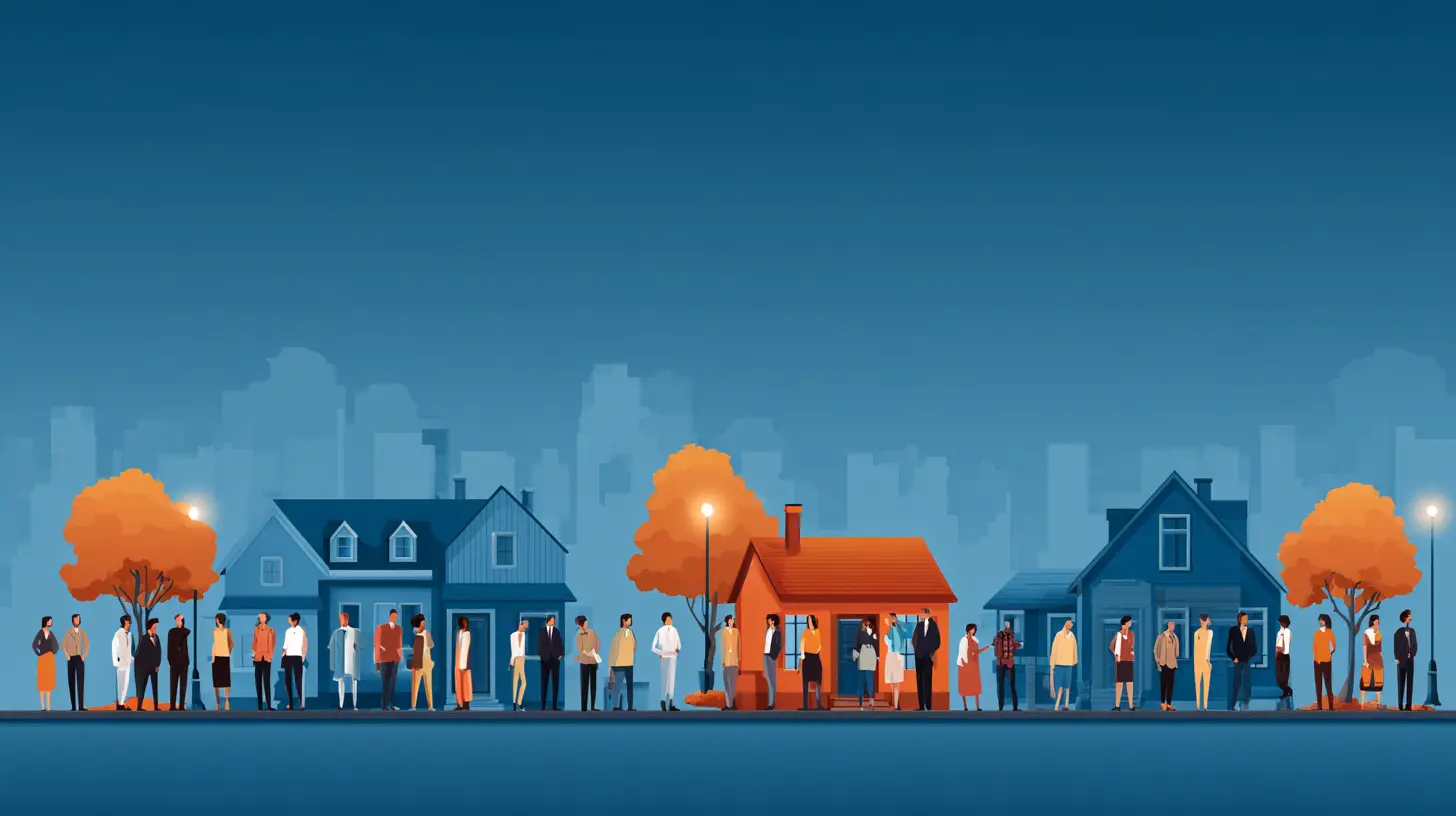
Why 2026 Is the Inflection Point
Several forces are converging to make community engagement more valuable than ever.AI Has Commoditized Information
Buyers and sellers now have access to the same data agents do. Property histories, valuation estimates, market trends, and even negotiation strategies are a search away. The information advantage that agents once held has largely disappeared.What has not been commoditized is local judgment. Knowing that a particular street floods during heavy rains, that a developer is quietly buying up parcels, or that a school district is about to redraw its boundaries, that kind of knowledge comes from being present. AI can summarize public data. It cannot tell you what the neighbors are worried about.
Trust Has Become the Scarcest Resource
Consumers are more skeptical than ever. They have been burned by bad advice, hidden fees, and agents who disappear after closing. Trust is no longer assumed. It has to be earned, and it is earned through repeated, low-stakes interactions over time.Community engagement is essentially trust-building at scale. Every volunteer shift, every local event, every honest conversation about the market contributes to a reputation that no competitor can buy.
Referral Networks Are Local by Nature
Most real estate transactions still come from referrals. Despite all the technology, the majority of buyers and sellers choose an agent because someone they trust recommended them. Referrals are inherently local. They flow through neighborhoods, workplaces, schools, and social circles.An agent who is deeply embedded in a community has access to multiple referral networks simultaneously. An agent who is not has to rely on paid channels that are increasingly expensive and impersonal.

The Business Case, Not Just the Feel-Good Case
There is a tendency to frame community involvement as charity or personal fulfillment. That framing undersells it. Community engagement is a business strategy with measurable returns, though the returns often lag the effort.Consider the economics. A single transaction in many markets generates thousands of dollars in commission. If community engagement produces even one additional transaction per quarter, the return on the time invested is substantial. But the real value compounds. Each new client brings their own network. Each positive interaction reinforces your reputation. Over time, the cost of acquiring a client through community presence drops toward zero, while the cost through paid channels continues to rise.
There is also a defensive benefit. In a downturn, agents with strong community ties tend to survive. Their pipeline does not dry up overnight because it is not dependent on a single lead source. They have relationships that persist across market cycles.
Common Mistakes and Misconceptions
Before going further, it is worth addressing what community engagement is not, and where agents commonly go wrong.Mistake One: Treating It as a Campaign
Community engagement is not a 90-day push. It is a long-term practice. Agents who show up for a few months, do not see immediate results, and then disappear damage their reputation more than if they had never started. Consistency matters more than intensity.Mistake Two: Making Everything About Real Estate
If every conversation is a pitch, people will avoid you. The most effective community members are genuinely interested in the community itself. Real estate comes up naturally, but it is not the only topic. This is not manipulation. It is how normal relationships work.Mistake Three: Spreading Too Thin
It is tempting to try to be everywhere. The agents who get the most from community engagement often focus on a specific area, cause, or group. Depth beats breadth. Being known as the go-to agent for a particular neighborhood or community is more valuable than being vaguely familiar across a whole city.Mistake Four: Ignoring Online Communities
Community is not only geographic. Online groups, local forums, and neighborhood apps are real communities too. Agents who dismiss them miss opportunities. That said, online engagement has its own etiquette. Overt self-promotion is usually unwelcome. Being helpful and consistent is what works.
How to Build Genuine Community Engagement
There is no single formula, but there are principles that consistently produce results.Start With What You Already Care About
The fastest way to burn out is to fake interest in something you do not care about. If you love youth sports, get involved in youth sports. If you care about housing policy, attend local government meetings. Authenticity is not a marketing buzzword here. It is what makes the effort sustainable.Choose a Few Commitments and Go Deep
Pick two or three organizations, causes, or groups and commit to them for the long term. Show up regularly. Take on responsibilities. Become someone people rely on. This is where the compounding happens.Be Useful Before You Need Anything
The instinct to ask for business is strong, especially when you are building a pipeline. Resist it. The agents who succeed at community engagement are the ones who give first, often for years, without expecting anything in return. The business comes later, and it comes stronger.Connect People to Each Other
One of the most valuable things you can do as a community member is introduce people to each other. A business owner who needs a good accountant. A new resident who wants to meet other parents. A local nonprofit looking for volunteers. When you become a connector, you become indispensable.Share Knowledge Without Expecting a Transaction
Answer questions. Explain how things work. Help people understand the market even when they are not buying or selling. This builds credibility and positions you as a resource rather than a salesperson.Trade-Offs and Nuances
Community engagement is not a universal solution, and it comes with real trade-offs.It is time-intensive. The hours you spend at a community event are hours you are not spending on lead follow-up or listing presentations. For agents in a financial crunch, this can feel like a luxury they cannot afford. The honest answer is that community engagement is an investment that pays off over time, not immediately. Agents who need quick cash may need to balance it with more direct prospecting.
It is also not equally effective everywhere. In small towns and tight-knit neighborhoods, community engagement can be the dominant strategy. In transient markets or areas with high turnover, its impact may be slower to materialize. Agents should assess their specific market before committing heavily.
Finally, community engagement can blur boundaries. When your clients are also your friends and neighbors, it can be harder to maintain professional distance. This is manageable, but it requires self-awareness and clear communication.
What This Looks Like in Practice
Imagine two agents in the same market.The first agent runs ads, buys leads, and sends automated follow-ups. Their pipeline is entirely dependent on platforms they do not control. When costs rise or algorithms change, their business suffers.
The second agent serves on a local nonprofit board, coaches a youth team, and hosts a monthly coffee meetup for small business owners. They do not run ads. Their pipeline comes from people they know and people those people refer. When the market shifts, their business holds steady.
The second agent is not necessarily more talented. They simply built a different foundation. In 2026, that foundation will matter more than ever.
The Long Game
Community engagement is not a shortcut. It is a slow, cumulative advantage that rewards patience and consistency. It will not rescue an agent who cannot execute on the basics of listing, negotiating, and closing. But for agents who already have those skills, it is the difference between competing on price and competing on trust.The agents who understand this will not just survive the next market cycle. They will be the ones others wonder how they built such a durable business. The answer will not be a secret tool or a clever hack. It will be years of showing up, being useful, and genuinely caring about the place they live and work.
That is not a marketing strategy. It is a life strategy. And in real estate, it is increasingly the only one that lasts.
all images in this post were generated using AI tools
Category:
Realtor TipsAuthor:

Melanie Kirkland