Suburban Sprawl or Urban Infill: Where Will Demand Go by 2027?
18 September 2026
The next three years will not produce a single winner. They will produce a split market, and the split will be geographic, demographic, and financial rather than ideological. If you own land, build homes, lend against them, or advise people who do, the useful question is not which side of the sprawl versus infill debate is morally or aesthetically superior. It is where actual household demand will clear at a price that supports construction, and what has to be true for that demand to show up.
This article works through that question with the tools a practitioner would use: migration data, cost structures, infrastructure constraints, interest rate sensitivity, and the specific local conditions that flip a market from one pattern to the other. It also flags the places where conventional wisdom is likely to be wrong by 2027.
The Short Answer, Stated Plainly
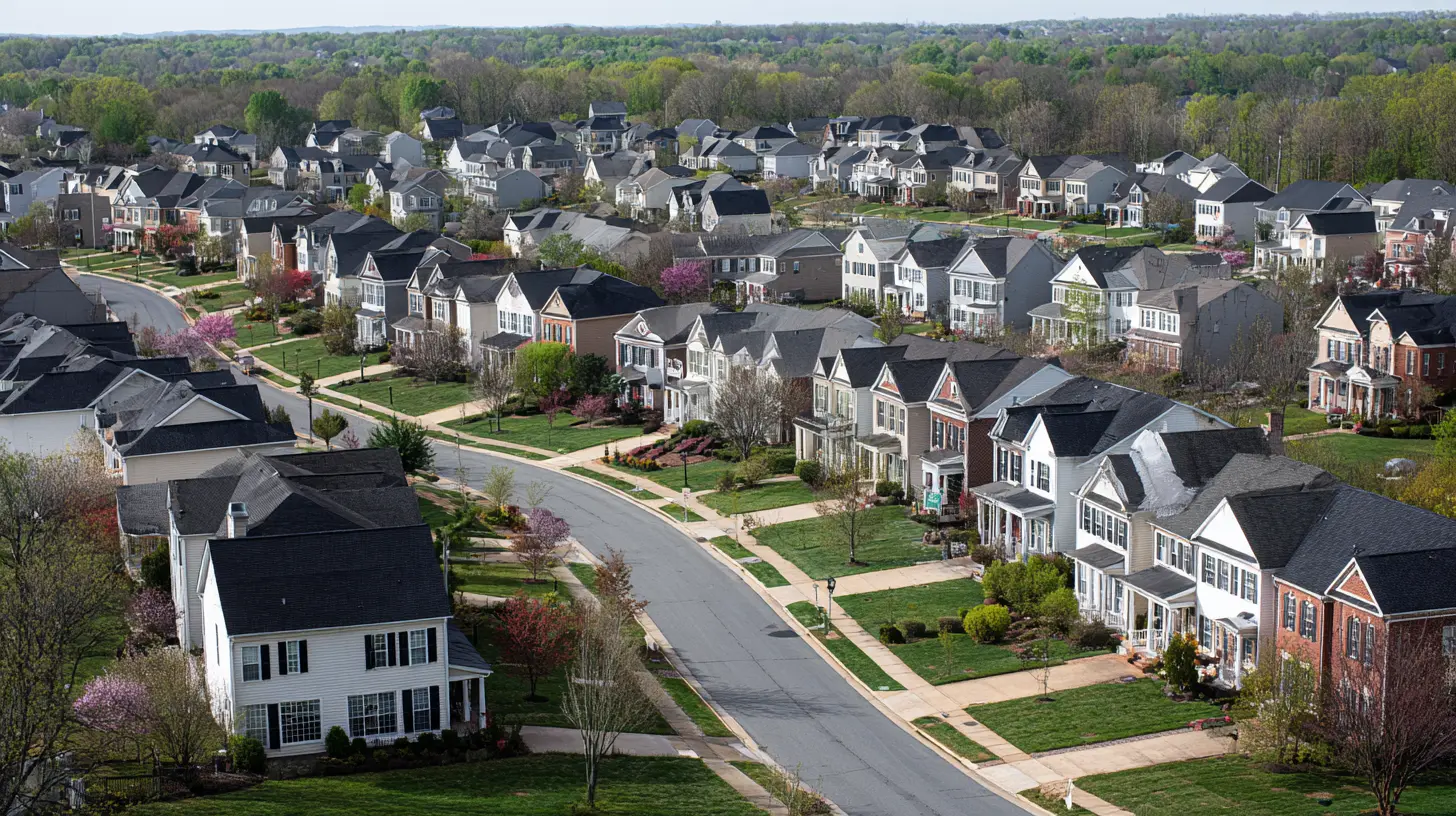
Expect both. Suburban and exurban growth will continue in metros with affordable land, permissive development rules, and job centers that tolerate long commutes. Urban infill will strengthen in metros with constrained geography, high incomes, strong transit, and a deep pool of renters who value time over square footage.The more important shift is compositional. By 2027, demand will be less about the binary choice between a downtown condo and a cul-de-sac house and more about the middle: walkable suburbs, small-lot single-family, townhome clusters, and mixed-use nodes at the edge of major employment centers. The projects that win will be the ones that combine suburban space with urban convenience, and they will win in places that make that combination legal to build.
What Actually Drives the Decision
Households do not choose sprawl or infill in the abstract. They respond to four forces, and those forces move at different speeds.Cost per unit of space. Land is the swing factor. In a metro where finished lots cost 40,000 dollars, a builder can deliver a detached house at a price a median household can finance. Where finished lots cost 300,000 dollars, the same house is unreachable for most buyers, and the market shifts toward attached product, smaller footprints, and rental. This is arithmetic, not preference.
Time cost. Commute time behaves like a tax. When a household saves 40 minutes a day by living closer in, that is roughly 160 hours a year. Whether they value it at 20 dollars an hour or 80 dollars an hour changes what they will pay for location. Remote and hybrid work reduced the frequency of that tax for some households, which loosened the penalty on distance. It did not eliminate it, because hybrid schedules still cluster in-person days and because school, childcare, and social networks anchor people to specific places.
Financing conditions. Infill projects are more sensitive to interest rates and construction cost than most suburban greenfield work, because they carry higher land basis, longer entitlement timelines, and more complex vertical construction. When capital is expensive, marginal infill projects stall first. When capital is cheap and rents are rising, infill pencils out and attracts institutional capital.
Regulatory friction. This is the variable most often underestimated. A market can have enormous latent demand for walkable infill and still produce almost none of it if zoning caps density, parking minimums inflate cost, and the approval process takes four years with discretionary review. Conversely, a metro with modest demand can produce a lot of suburban product quickly if the entitlement path is predictable.
The Case for Continued Suburban Growth
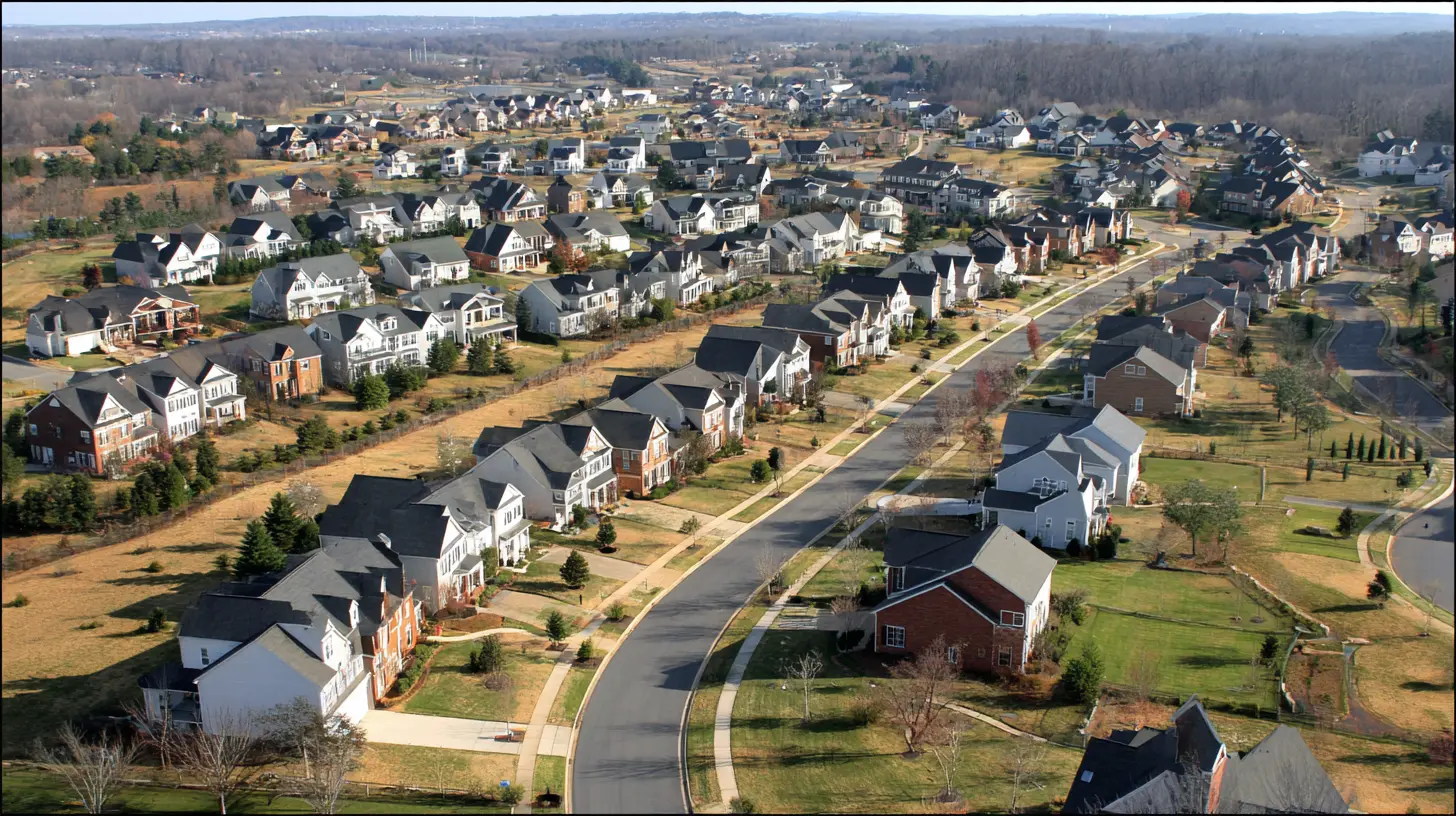
Suburban demand is not a residual category that exists only because people cannot afford cities. It has durable drivers.Land supply and construction economics
Greenfield development is cheaper per unit almost everywhere land is available. Site work is simpler, trades can work at scale, and builders can standardize plans. That cost advantage translates directly into affordability, and affordability is the single strongest predictor of where household formation actually occurs.Consider the pattern in fast-growing metros across the Sun Belt and the Mountain West. Growth has concentrated in counties that were farmland or desert a generation ago, not because buyers preferred raw land, but because that is where a household earning the local median income could buy a new house with a manageable payment. When the same household is priced out of the urban core by a factor of two, the decision is made for them.
The school and space calculus
For families with children, the practical trade-offs of urban living often outweigh the cultural ones. Larger units, private outdoor space, lower density, and in many regions, a simpler school assignment process, all favor suburban locations. This is not a permanent law of nature, and urban school systems in some cities have improved markedly. But the household-level math is real, and it will still be real in 2027.Remote work widened the radius, not the preference
Hybrid and remote arrangements allow households to trade commute time for housing cost or space. The effect is not that everyone wants to live far from everything. The effect is that the acceptable radius around a job center expanded. That benefits suburbs and exurbs that sit within a reasonable drive of employment and amenities, and it hurts locations that were only viable because of a short daily commute. The distinction matters: remote work does not uniformly boost sprawl, it reorders which suburban locations are attractive.Where suburban growth is likely to be strongest through 2027
- Metros with available developable land and a predictable approval process.- Markets with in-migration from higher-cost regions and a shortage of existing inventory.
- Suburbs with existing commercial centers that can absorb new housing without new highway capacity.
- Areas with acceptable water, sewer, and utility capacity, which is a harder constraint than many buyers realize.

The Case for Urban Infill
Infill demand is driven by a different set of fundamentals, and it is more concentrated but also more resilient in specific segments.Infrastructure is already paid for
Infill uses existing roads, water, sewer, transit, and schools. The marginal public cost of adding a household in a built-out area is often far lower than the cost of extending infrastructure to a greenfield site. That matters for municipal budgets, and it increasingly matters to state governments that tie funding to infrastructure efficiency. Where policy reflects that reality, infill gets a tailwind.Demographics favor rental density in specific markets
Single-person households, older adults downsizing, and young professionals in high-income metros form a durable rental base. In cities where incomes are high and land is scarce, that base supports rents that justify mid-rise and high-rise construction even when interest rates are uncomfortable. The demand is not universal. It concentrates in metros with strong job density, limited geography, and a cultural preference for urban living that persists across economic cycles.The amenity premium is real but not infinite
Walkability, transit access, and proximity to employment command a price premium. The size of that premium varies enormously by market. In some cities it is large enough to support new construction. In others it is a nice-to-have that does not cover the cost of structured parking and podium construction. The mistake is assuming the premium is uniform.Where infill is likely to be strongest through 2027
- Coastal and geographically constrained metros with high incomes and strong transit.- University and medical anchors that generate steady demand for rental housing.
- Suburban downtowns and corridor redevelopment sites, which are technically infill but not urban core.
- Markets where state law has preempted local density limits or streamlined approvals.
The Middle Ground Is Where the Volume Will Be
The most important trend for 2027 is not the contest between downtown and the cul-de-sac. It is the growth of the in-between product.Missing middle housing, a term for duplexes, triplexes, fourplexes, townhomes, and small apartment buildings, occupies the space between detached houses and large multifamily. It fits on suburban parcels, it can be built at moderate density, and it serves households that want more space than an apartment but cannot afford or do not want a large detached house.
Why this matters for demand forecasting: missing middle product can be delivered in locations that already have infrastructure, schools, and retail, without the political fight that accompanies high-rise development. It also tends to be more resilient to interest rate swings because it is smaller in scale and can be built by regional rather than national builders.
The constraint is regulatory. In many jurisdictions, the zoning that would allow this product is illegal. Where it has been legalized, production has increased, though not always as fast as advocates predicted, because financing, parking requirements, and construction cost remain real obstacles. By 2027, the markets that reform these rules will capture demand that would otherwise go to the exurban fringe.
A Practical Framework for Judging a Specific Market
If you are evaluating a site, a loan, or a development strategy, work through these questions in order. They will tell you more than any national forecast.1. What is the finished lot or entitled land cost per unit? If it exceeds roughly 25 to 30 percent of the achievable sales price, the project is fragile. This is a rule of thumb, not a law, but it filters quickly.
2. What is the approval timeline, and is it discretionary? Predictable by-right approvals support suburban and infill alike. Discretionary review adds cost, delay, and risk, and it disproportionately kills infill because infill projects carry higher land basis.
3. Does the infrastructure exist or does it need extension? Sewer, water, and road capacity are often the binding constraint on suburban growth, and they are frequently the reason a site that looks cheap is not.
4. What is the realistic commute or access profile? Test it against actual hybrid schedules, not pre-pandemic assumptions. A location that requires three in-person days a week has a different value than one that requires one.
5. Who is the end user, and what can they pay? Match product type to the income distribution of the submarket, not to a national average. A market with a median household income of 70,000 dollars cannot absorb a wave of 600,000 dollar townhomes.
6. What is the rental alternative? In markets where renting is far cheaper than owning on a monthly basis, for-sale demand weakens regardless of preference. This spread is one of the most underused signals in residential forecasting.
Common Mistakes and Misconceptions
Assuming preference equals demand. Surveys consistently show a share of respondents saying they would like to live in a walkable neighborhood. That is not the same as demand, because demand requires willingness and ability to pay. Many of those respondents will buy a suburban house because that is what their budget and their life stage support.Treating remote work as a permanent reset. Hybrid arrangements are still evolving. Employers have been adjusting in-person requirements, and the equilibrium is not settled. Build your 2027 assumptions around a range of scenarios, not a single outcome.
Ignoring the cost of carry. Infill projects often spend two to four years in entitlement and preconstruction. At current interest rates, that carry can exceed the land cost. Suburban projects can also carry, but usually for shorter periods and with more predictable milestones.
Confusing density with affordability. New market-rate infill housing is typically expensive, because it is new and because land and construction costs are high. It adds supply and can relieve pressure over time, but it does not immediately produce affordable units. Expecting it to do so leads to bad policy and disappointed investors.
Overlooking insurance and climate costs. In some coastal and wildfire-exposed markets, insurance availability and premium increases are changing the effective cost of ownership faster than any preference shift. This is a genuine wildcard for 2027 and it cuts against both sprawl in vulnerable areas and infill in flood-exposed districts.
Betting on a single national narrative. The biggest analytical error is extrapolating from one or two headline markets. The United States is not one housing market. It is dozens of regional markets with different land constraints, income distributions, and regulatory regimes.
What to Watch Between Now and 2027
A few observable signals will tell you which way a market is tilting before the headline data confirms it.- Permit mix. The ratio of multifamily to single-family permits in a metro is a fast indicator of where capital and demand are converging.
- Lot supply and price. Rising finished lot prices signal constrained suburban supply. Falling prices signal oversupply or weakening demand.
- Rent-to-own spread. When renting is dramatically cheaper than owning, for-sale demand softens and rental demand strengthens.
- State preemption activity. Legislation that overrides local density limits is a leading indicator of future infill supply.
- Infrastructure moratoria. Sewer and water connection bans in growing suburbs are an early sign that greenfield growth is hitting a hard ceiling.
- Insurance and tax changes. Property tax reassessments and insurance repricing shift the effective cost of ownership in ways that can override preference.
Practical Recommendations
For builders and developers. Diversify across product types and locations rather than betting on one pattern. Pursue by-right approvals where possible. Underwrite infill with longer timelines and higher contingency than you would use for greenfield. In suburban markets, focus on locations with existing commercial anchors and infrastructure capacity, because those will hold value as the market matures.For investors. Separate the land play from the operating play. Land appreciation in constrained infill markets has historically been strong, but it is illiquid and sensitive to rate changes. Cash-flowing rental product in the middle of the market, whether suburban or infill, tends to be more durable.
For municipalities. The most effective thing a city can do is make the approval process predictable and allow a range of housing types by right. This reduces cost, shortens timelines, and lets the market respond to demand as it shifts. It also reduces the political cost of every individual project, because fewer projects require discretionary review.
For households. Decide based on your actual constraints: budget, commute frequency, school needs, and how long you plan to stay. The market will offer both options in most metros by 2027. The question is which one fits your life, not which one is winning a national trend.
The Bottom Line
By 2027, demand will not be a single stream. It will be a set of streams moving at different speeds. Suburban growth will continue where land is available and approvals are predictable. Infill will strengthen where geography, income, and policy combine to support it. The largest volume of new demand will land in the middle, in walkable suburbs, small-lot single-family, townhomes, and mixed-use nodes that offer a blend of space and convenience.The winners will not be the markets that pick a side. They will be the ones that make it legal and financially feasible to build what households actually need, in the locations where they can actually afford it.
all images in this post were generated using AI tools
Category:
Housing TrendsAuthor:

Melanie Kirkland