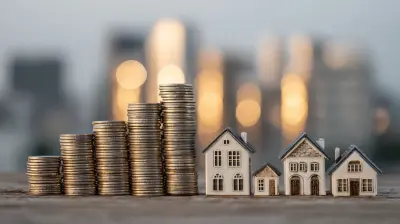
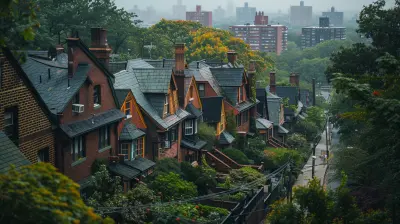
Urban Revitalization Projects That Could Impact Prices by 2027
12 September 2026
Urban revitalization is one of those phrases that gets tossed around in city planning meetings and real estate seminars as if everyone agrees on what it means. They do not. For a homeowner in a transitioning neighborhood, it might mean new sidewalks and a grocery store that finally sells fresh produce. For an investor, it means a bet on future demand. For a longtime renter, it can mean the uneasy feeling that the place they have called home for twenty years is about to become unaffordable.
What matters for anyone buying, selling, or holding property today is understanding which revitalization efforts are real, which are speculative, and which could plausibly move prices by 2027. That is a short timeline in urban development terms. Most large projects take five to ten years from announcement to completion, and many never finish at all. But price movement often happens long before shovels hit the ground. Anticipation alone can shift a market.
This article looks at the types of revitalization projects most likely to influence home values over the next few years, why they matter, how to evaluate them, and where the risks hide. It is not a crystal ball. It is a framework for thinking clearly about the intersection of public investment, private capital, and the neighborhoods where people actually live.

Why 2027 Is a Meaningful Horizon
Real estate markets do not respond to ribbon cuttings. They respond to expectations. A transit line approved in 2024 might not open until 2029, but buyers start pricing it in almost immediately. By 2027, many projects currently in planning or early construction will have reached a stage where their impact is visible, even if the project is not finished.Three factors make 2027 a useful checkpoint.
First, a large share of federal infrastructure and housing funding allocated in recent years will have moved from announcement to disbursement. That transition separates real projects from press releases.
Second, interest rate conditions by 2027 will shape how much of that investment translates into actual development. Cheap money accelerates construction. Expensive money stalls it. Neither outcome is guaranteed, but the direction will be clearer.
Third, demographic shifts already underway, including migration to mid-sized cities and continued demand for walkable neighborhoods, will have had time to either confirm or contradict current assumptions.
In other words, 2027 is close enough to matter for a buyer's decision today, but far enough that not everything will be settled.

The Categories of Revitalization That Move Prices
Not all revitalization is equal. A new park can lift nearby values modestly. A new transit station can reshape an entire submarket. A failed stadium deal can leave a neighborhood worse off than before. Understanding the categories helps you separate signal from noise.Transit-Oriented Development
Transit projects have the most consistent track record of influencing property values. When a new rail station, bus rapid transit line, or even a well-designed streetcar route opens, the value of homes within a reasonable walking distance tends to rise relative to comparable homes farther away.The reason is straightforward. Transit reduces the effective cost of commuting, both in money and time. That makes a location more desirable, which increases demand. The effect is usually strongest in the period just before and just after opening, but some of it gets priced in years earlier.
What matters here is not just the presence of a station, but the quality of the service. A station with frequent, reliable service to job centers changes behavior. A station with infrequent service and poor connections does not.
Adaptive Reuse of Industrial and Commercial Space
Many cities have large inventories of underused warehouses, factories, and office buildings. Converting these into housing, retail, or mixed-use space can transform a district quickly because the infrastructure already exists. Roads, utilities, and transit are often in place.The advantage of adaptive reuse is speed. Building new construction from scratch takes years. Retrofitting an existing structure can be faster and sometimes cheaper, though not always. The disadvantage is that these projects are complex. Environmental remediation, zoning changes, and structural limitations can add cost and delay.
When adaptive reuse works, it brings people and activity into areas that had neither. That tends to lift surrounding property values, especially if the new development includes amenities like grocery stores, restaurants, or coworking spaces.
Downtown and Main Street Revitalization
Downtown revitalization is the most visible and most oversold category. Every city has a plan. Few execute well.The projects that succeed tend to share a few traits. They focus on creating a reason for people to be there outside of work hours. They mix residential, commercial, and cultural uses. They invest in public spaces that feel safe and welcoming. They do not rely on a single anchor tenant or a single attraction.
The ones that fail often do so because they prioritize large, expensive projects over small, incremental improvements. A new convention center does not revive a downtown if the streets around it are empty after 6 p.m. A cluster of small businesses, a farmers market, and reliable lighting do more.
Infrastructure and Environmental Improvements
Flood mitigation, greenways, and brownfield cleanup are less glamorous than a new stadium, but they can have a durable effect on property values. Homes in areas that flood repeatedly trade at a discount. If a project meaningfully reduces that risk, the discount shrinks.Greenways and linear parks are another example. They provide recreation, improve walkability, and often connect neighborhoods that were previously cut off from each other. The effect on values is usually gradual, but it is real.
Large Anchor Projects
Stadiums, arenas, and convention centers get the most headlines and the most public money. They also have the weakest track record of delivering broad neighborhood benefits.Research on sports facilities has generally found little to no net positive effect on surrounding property values, and in some cases a negative effect due to traffic, noise, and the displacement of existing businesses. The jobs they create are often part-time and seasonal. The economic activity they generate tends to be redistributed from other parts of the city rather than newly created.
This does not mean every anchor project is bad. A well-integrated arena in a dense, already thriving district can add to the mix. But as a standalone revitalization strategy, it is a weak bet.

How to Evaluate a Project Before It Affects Prices
The challenge for buyers and investors is that most revitalization projects are announced long before they are funded, approved, or built. Many never happen. So how do you tell the difference between a real catalyst and a wishful rendering?Look at the Funding
A project with committed, identified funding is far more likely to proceed than one relying on future grants or unspecified private investment. Check whether the money is actually appropriated, not just promised. Public budgets are public documents.Check the Approvals
Zoning changes, environmental reviews, and permits are concrete milestones. A project that has cleared these hurdles is much closer to reality than one still in the conceptual phase.Examine the Track Record
Who is behind the project? A developer with a history of completing similar work in similar markets is a better bet than one with no local experience. The same applies to public agencies. Some cities execute well. Others do not.Consider the Timeline
If a project is not expected to break ground until 2027, its price impact by 2027 will be mostly speculative. That does not mean it has no effect, but it means the effect is fragile. Bad news can erase it quickly.Assess the Fit
A project that aligns with existing neighborhood character and demand is more likely to succeed than one that tries to create demand from nothing. A new grocery store in a neighborhood that already has foot traffic will thrive. A luxury condo tower in an area with no services and poor transit will struggle.
Real-World Patterns Worth Understanding
It is tempting to look for a single formula, but cities are too different for that. Still, some patterns repeat.In cities where transit has expanded, homes near new stations have often seen values rise faster than the citywide average, particularly in the years surrounding the opening. The effect is usually strongest for homes within a half-mile walk, and it fades with distance.
In cities that have invested in greenways and riverfront parks, adjacent neighborhoods have often seen renewed interest from buyers who value outdoor access. This effect is more pronounced in places where the greenway connects to job centers or other amenities.
In cities that have tried to revive downtowns through large anchor projects alone, results have been mixed at best. The places that have done well typically combined the anchor with housing, small business support, and public space improvements.
Common Mistakes Buyers and Investors Make
The most common mistake is buying the announcement rather than the project. A rendering is not a building. A press conference is not a permit. Too many people pay a premium for a project that never materializes.Another mistake is assuming that all revitalization is good for all residents. It is not. Rising values can displace longtime residents, and in some cases, the new amenities are not accessible to the people who already live there. If you are buying as an investor, this may not concern you directly, but it should inform how you think about neighborhood stability and long-term demand.
A third mistake is ignoring the broader market. A revitalization project can lift a neighborhood, but it cannot overcome a regional economic downturn or a sharp rise in interest rates. Context matters.
Finally, many buyers overestimate the speed of change. Even successful projects take years to fully influence a market. If you need a quick return, revitalization plays are usually the wrong tool.
What to Watch Between Now and 2027
If you want to track which projects are likely to matter, focus on a few indicators.Watch for the transition from planning to construction. Groundbreaking is a meaningful signal. So is the hiring of a general contractor.
Watch for complementary private investment. When a public project attracts nearby private development without additional subsidies, that is a sign of genuine demand.
Watch for changes in local zoning that allow more housing. Areas that add housing supply tend to be more resilient than those that do not, even if short-term price growth is slower.
Watch for shifts in commute patterns and remote work. If more people can work from anywhere, the value of proximity to a specific office district declines, but the value of proximity to amenities, transit, and community rises.
Practical Advice for Different Situations
If you are a homeowner in a neighborhood with a credible revitalization project on the horizon, the main thing to consider is whether you plan to stay. Rising values are good if you sell, but they also mean higher taxes and higher costs if you stay. Some places have protections for longtime residents. Many do not.If you are a first-time buyer, look for areas where the project is funded and under construction, not just announced. You will pay less of a premium than you would in a neighborhood where the project is already complete, and you will capture more of the upside.
If you are an investor, diversify your bets. Do not put everything into one project or one neighborhood. Revitalization is uncertain by nature. Spread your risk.
If you are a renter, pay attention to local policies around rent stabilization, inclusionary zoning, and community land trusts. These can determine whether you benefit from or are harmed by revitalization.
The Bottom Line
Urban revitalization is not a single thing. It is a mix of public investment, private capital, and community change. Some projects will deliver on their promises. Many will not. The ones that matter most for property values by 2027 are likely to be those that are already funded, already approved, and already under construction, particularly in transit, adaptive reuse, and environmental improvement.The smartest approach is not to chase headlines. It is to understand the mechanics of how projects affect demand, to evaluate them with clear eyes, and to make decisions based on your own timeline and goals rather than on someone else's rendering.
all images in this post were generated using AI tools
Category:
Housing Market TrendsAuthor:

Melanie Kirkland
Discussion
rate this article
2 comments
Flint Carr
Urban revitalization is a powerful driver of real estate prices. Projects that enhance infrastructure, create green spaces, and improve accessibility can significantly attract new residents and businesses. By 2027, such initiatives will likely reshape neighborhoods, making them more desirable and potentially increasing property values.
October 5, 2026 at 4:06 AM
Melanie Kirkland
Absolutely, urban revitalization is crucial. Enhanced infrastructure and green spaces make neighborhoods more appealing, driving demand and property values up. Exciting changes are ahead by 2027!
Gabriel McKittrick
Will these projects turn neighborhoods into gold mines or just fancy playgrounds for hipsters?
September 18, 2026 at 4:32 AM
Melanie Kirkland
It depends on the execution. If done right, they could boost local economies. If not, they might just attract a trendy crowd without real benefits.